
Read about students just like you who have received Awards and Scholarships from us to help them achieve their educational goals.

Hayden Bueckert is thriving in the kinesiology program at Vancouver Island University. He’s getting an A+ in the two most…
View story
When Muskan Tiwari began her undergraduate studies at the University of the Fraser Valley, she expected to follow the typical…
After completing high school in Shawnigan Lake, Michelle Silva originally decided to attend Vancouver Island University, pursuing a Bachelor of…
Leona DeOliveira feels that she has finally found her calling. Originally from Vancouver Island, Leona moved to Alberta in…
Ever since he was a kid, Connor Lewis has wanted to be a lawyer. Now, he is in the…
When Ava Craig began her studies at Okanagan College, she wasn’t sure what she wanted to do. That changed…
Rachel Beach was in her third year at University of British Columbia completing a degree in Sociology and was…
Engineering has always intrigued Michelle. For her, it is the ideal combination of her interests in art, math, and…
I grew up in the little farming town of Glencoe, in southwestern Ontario. I’m definitely the black sheep in…

I was born and raised in Surrey, BC and have always had a passion for music and writing. I love…
I am a West Coast kid, from Vancouver Island. My parents split up when I was young, so I bounced…
My passion for science and engineering began early in life. Growing up on beautiful Vancouver Island, it was during my…
I am Gitxsan from Gitanyow on my mom’s side, and I have mixed settler ancestry on my Dad’s side. I…
Over the past decade, I’ve dedicated my career to leadership roles in Human Resources (HR) across diverse sectors such as…
Taanishi Logan Burd dishinihkaashoon (Hello my name is Logan Burd) I am a proud Métis Citizen of Métis Nation British…
I have had a passion for tourism and travel since I was 8 years old, when my grandmother flew me…
I am Esk’etemc First Nations from Alkali Lake, BC. Born in 1974. I was raised in Williams Lake. Like many…
IN HER OWN WORDS: When I was 11, my dad began teaching me about world-renowned physicists, theorists, and scientific concepts….
IN HIS OWN WORDS: I was born in 1987, to a Scotch/Irish mother and Cree/Metis father, but raised by my…
IN HIS OWN WORDS: When I was two years old, my father suffered a traumatic brain injury. After that, I…
IN HIS OWN WORDS: I was born in Nigeria in 2001. When I was 3 years old, my Dad got…
IN HER OWN WORDS: I was born & raised in the beautiful Okanagan. I am currently in my 3rd…
IN HER OWN WORDS: I was born in Nelson, BC 25 years ago, to an Indigenous (Cree) mom and Doukobor…
IN HER OWN WORDS: I was born and raised in a loving family, in Prince George, BC. Early on in…
IN HIS OWN WORDS: I’ve spent most of my life in Tofino, a small town of 1500. So living in…
Leah Alfred-Olmedo is a second-year master’s degree student studying English literature at the University of British Columbia. Her primary research…
Meghan is from Vernon, BC from a family who enjoyed the outdoors and from whom she learned and developed her…
“I want to show Indigenous women we need to hold a presence in the room and be enrolled in tough…
Craig Adams first received an Indigenous Student Award in 2020 and then he received a subsequent renewal of the Award…
Xaanja Free is currently taking a Master’s in Library and Information Studies specializing in First Nations Curriculum Concentration at the…
“I am so grateful for the Transfer Scholarship Program which helps students like those of us in nursing. The financial…
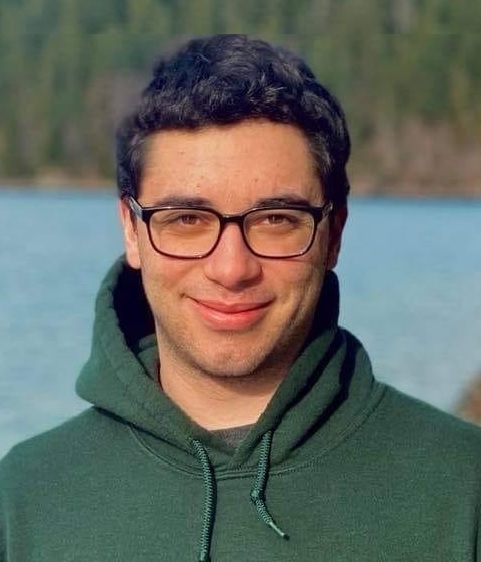
“Being a recipient of this Transfer Scholarship, it was like a dream coming true, it was the help I was…
“Listening to learn, rather than to respond is one of the greatest lessons I learned from my grandparents”, says Indigenous…
Maria was inspired to pursue a career in engineering by her father, a civil engineer. “My father taught me the…
“Find something you are passionate about and pursue that passion. Do not be afraid to ask other people for help….
Listen very closely to yourself and never be afraid to change trajectories. Wise words from Ike Barber Transfer Scholarship awardee…
James Beardy is an inspiration and a role model for anyone who feels like they need a start over. Moving…
Small-town Saskatchewan raised Jared Kurtenbach is as jovial and charismatic as they come. Originally pursuing a career in acting,…
Wonderfully assured for a 19-year-old, Indigenous Award recipient Brendan Eshom is as inspiring as he is easy to talk to….
Indigenous Award winner, Alexyss Dieno, is a model of perseverance and a caring heart. Currently in the Bachelor of Health…
Follow Your Passion, Never Give Up, Build Your Support System Raven Fawkes is a determined and passionate individual with deep…
Transfer Scholarship alumni first to donate back to future students. Shan Siddiqui made a pledge to himself a decade ago:…
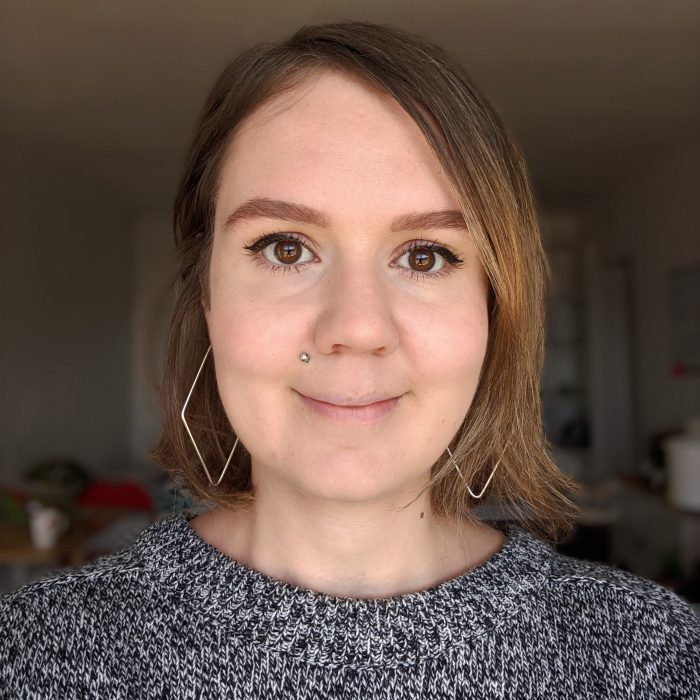
“Be prepared to put in your all!” Studying human rights and refugee law in South Africa. “Global citizenship is about…
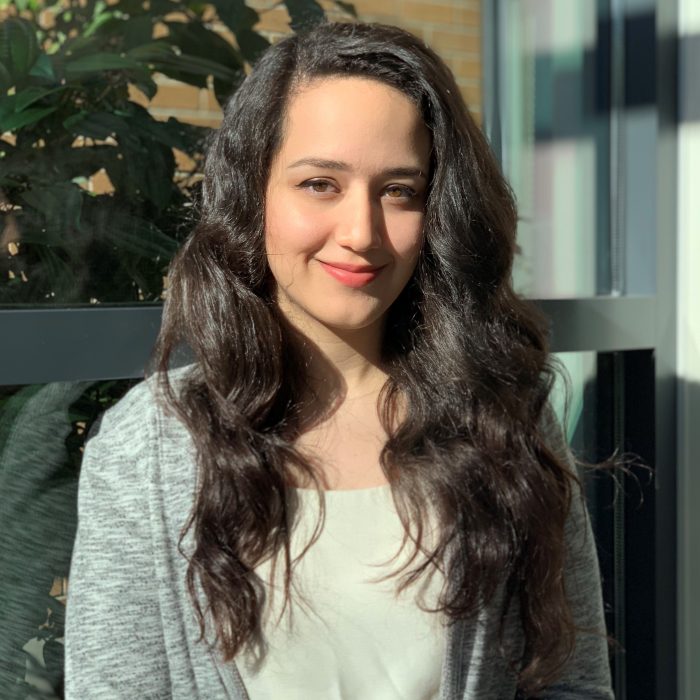
Combining creative thinking and engineering to solve important problems and improve the lives of people Creative minds express themselves in…
Driven by enthusiasm for community, collaboration and conservation Motivated by a deep appreciation for nature, wildlife, and people, Indigenous Award…
“The journey there will be different for everyone, but you will eventually end up somewhere where you will shine if…
Northern Lights College graduate awarded the Transfer Scholarship Fort St. John’s Tara Good found the transition from one post-secondary institution…
Mentorship is key for women studying in technology Some people are destined to be heroes — people that view roadblocks…
Determination – the key for future pediatric surgeon Determination is a central theme for Indigenous Award winner and future pediatric…
It all boils down to the same thing — family If you ask Liam Robertson about his career, his goals,…
Validation to pursue the exceptional integration of arts and mathematics. Working hard, contributing to the community, owning leadership roles, and…
“Maybe I can be that person for someone and make that difference” Shane Baker attributes his drive to give back…
Driving Cultural Justice and Inclusion, So That We All May Flourish Q & A with Sultan Singh Sandur, Master of…
Forging friendships and sharing knowledge Premier’s International Scholarship recipient Danielle Nelson is building extraordinary connections between Canadians and Austrians The…
How staying true to your interests will always lead you in the right direction Q & A with Matthew Montgomery,…
Paddling upstream: Working toward justice for Indigenous peoples Q & A with Theresa John, Juris Doctor of Laws, Thompson Rivers…
Where Will My Impact Be Greatest In This World? Q & A with Aaron Lambert, BEd student, Vancouver Island University…
Executing a midlife pivot to make a lasting impact Q & A with Mark Connelly, Bachelor of Social Work, University…
Righting Inequalities So That Everyone Can Flourish Q & A with Martina Nenasheff, Bachelor of Social Work student, University of…
Moving The Needle On Youth Mental Health In British Columbia Q & A with Amy Parker, nursing student, Vancouver Island…
My Brain Wasn’t Made To Memorize Microbes. Q & A with Marlie Russell, computer science, UBC Okanagan When British Columbia…
I Thought That Only a Genius Would Pursue a Math Degree. Q & A with Natella Jafarova, statistics, University of…
You Probably Shouldn’t Do That. You’ll Get Grease All Over Your Clothes. Émilie Boras awarded $10,000 to support her mechanical…
Watch Me. I’ll Do What I Want To Do. First Nations student Jobina Tamminga receives $10,000 to support her studies…
Apart from the Pack A Premier’s International Scholarship makes study abroad a possibility for a BC man and his young…
In Business to Lift Others Up Premier’s International Scholarship winner Jason Mah knows the secret of life is to…
Leading by Example Aboriginal Award recipient Cody Isaac shares his positive energy with young people the world over When Cody…
The Stretch Assignment: Learning Abroad Premier’s International Scholarship recipient Maggie Li’s world expanded immeasurably through her exchange semester in France…
Hayden Bueckert is thriving in the kinesiology program at Vancouver Island University. He’s getting an A+ in the two most academically challenging courses of the program, Anatomy and Physiology. They also happen to be his two favourite courses, despite the intensive workload. It’s a testament to Hayden’s determination to succeed against the odds, an attribute he has displayed in many aspects of his life.
At VIU, Hayden has discovered a strong sense of community. “We share a lot of the same classes,” he says of his peers. This extends to his instructors, too: his anatomy professor happens to be his neighbour and operates a local physiotherapy clinic. Hayden finds the smaller size of VIU to be a benefit, creating a tight-knit community among students and professors.
Hayden is set on becoming a physiotherapist. He plans to “help people overcome chronic pain and stubborn injuries,” approaching his patients’ rehabilitation plans with passion and attention to detail. Hayden looks forward to translating the knowledge he is gaining through his studies towards a successful practice as a physiotherapist, providing “holistic solutions” informed by a deep understanding of biology and physiology.
Another motivation for Hayden’s career path is his own experience as a patient. While struggling with chronic pain and injury, Hayden found working with physiotherapists and others in healthcare professionals to be frustrating, time-consuming, and confusing. These experiences have furthered Hayden’s drive to pursue his career aspirations and seek to enact positive change in the industry.
The BC Scholarship Society’s Transition Award is offered to students like Hayden who are moving into post-secondary studies after completing ABE courses. The Award aims to assist in the financial strain that education can place on students. While Hayden works hard to supplement his income, there are limitations to how much he can take on. “Because of my injuries, even part‑time work is difficult,” he notes. Receiving the Transition Award has made a significant difference for Hayden. “It gave me some breathing room,” he says. “It’s alleviated the pressure.”
Since starting his kinesiology studies, Hayden has been able to develop a deeper understanding not only of his past injuries but also the means to work through them. “The coolest part about the anatomy and physiology courses,” he says, “is being able to apply that knowledge.” Though he still lives with the pain, Hayden characteristically sees it “as a constant reminder to focus my time and energy on learning” and pursuing his dreams.
When Muskan Tiwari began her undergraduate studies at the University of the Fraser Valley, she expected to follow the typical path to medical school by majoring in biology. That all changed in second year when Muskan enrolled in an introductory physics course and discovered her new passion, “a subject that challenged and fulfilled me like nothing else had.”
Though switching majors was “initially overwhelming,” studying physics gave Muskan “a lot of power to think analytically and apply problem solving skills.” And despite it not being an obvious precursor to medical school, Muskan believes a physics degree will support her pursuit of a career in medicine. “I can bring a different approach from physics to medicine,” she says.
The transition has not been without its challenges, though. The study of physics required a different style of thinking. Muskan has also “felt isolated in [this] male-dominated field.” She recounts dropping out of a robotics class in high school because she was the only woman in attendance. But, when she again found herself in the minority in her physics courses at UFV, Muskan vowed to not be intimidated: “This time, I’m not going to back out. I’m going to do what I love.”
Muskan has embraced physics both in and out of the classroom. She was elected Vice-President (Social) of the Physics Student Association in her third year and currently serves as the Vice-President (Internal) of the UFV Women in Engineering, Science, and Technology (WEST). Muskan is also the founder and President of the UFV Feminist Collective. It is through her work with these groups that Muskan hopes “to see more women entering fields that have traditionally been male dominated.”
Outside of her studies, Muskan enjoys volunteering in her community. She has participated in various medical-related programs, including a South Asian Day Program for Seniors. “I love to hear about their learned experience,” Muskan says. “I’m always looking to learn from other people.”
The BC Scholarship Society awards the Women in Technology & Indigenous Women in Technology Scholarships to support academically exceptional students in the fields of Computer/Data Science, Physics, Engineering, or Mathematics through their educational journey. For Muskan, the scholarship will help support her goal of attending medical school.
To prepare for medical school, Muskan will pursue additional biology and chemistry courses after completing her physics degree. Her career interests are broad: neurology, cardiac medicine, and radiation therapy all spark her curiosity. Through hospital‑based coursework, she has observed medical physicists at work firsthand, deepening her interest in how physics meets patient care.
Whether she becomes a medical physicist, a surgeon, or something in between, Tiwari’s path is clear: a future where science, service, and representation are inseparable.
After completing high school in Shawnigan Lake, Michelle Silva originally decided to attend Vancouver Island University, pursuing a Bachelor of Arts degree with a major in psychology. She became involved with the VIU Psychology Club and shortly after became Vice-President, organizing special events and other initiatives (including a self-care package handout initiative for World Mental Health Day and a Check-in Café providing students with an opportunity to chat with the Club members).
While she found her time at VIU fulfilling and a confirmation of her interest in the field of psychology, Michelle knew that transferring to a larger institution would open up more career and educational opportunities. Fulfilling a longtime dream, Michelle transferred to the University of British Columbia where she is currently completing her degree.
Michelle’s time at UBC so far has “definitely been positive.” She has kept very busy with coursework and has recently joined the UBC Psychology Students Association. “There are a lot of new opportunities [at UBC],” says Michelle.
Over the past few years, Michelle has dealt with health struggles related to dysautonomia. While the symptoms were overwhelming at first, she has been able to successfully able to manage using strategies and skills she’s picked up. She is particularly proud of having missed no classes in her recent Fall term.
Now near the end of her degree, Michelle is looking towards her future options. Courses in clinical sciences, education, and child & adolescent developmental psychology have sparked her interest in a number of potential career pathways, such as youth or school councillor. UBC offers a unique opportunity for Michelle to complete her Bachelor of Education in a shortened timespan, opening up another career pathway as a teacher. Michelle is also considering the possibility of completing a master’s degree at UBC or at the University of Victoria.
Like many students, a significant challenge for Michelle’s transfer was the financial cost. This was particularly the case in relocating to Vancouver, a city with a higher cost of living. “It would have meant working two part-time jobs,” Michelle explains. She is grateful that receiving the Ike Barber Transfer Scholarship has “really reduced a lot of financial stress” and that support from the Scholarship “makes it possible” for her to be on this journey.
Outside of academics, Michelle loves to crochet, occasionally selling her work at local craft fairs. Since transferring, Michelle has joined the UBC Knit & Sew club, where she says it has been “nice to find people with the same interests.” Through it all, Michelle is steadfast in following her dreams: “When things get harder and challenging, I focus on where I’m going.”
Leona DeOliveira feels that she has finally found her calling.
Originally from Vancouver Island, Leona moved to Alberta in her 20s to work as a welder. It was there that she met her husband. After moving back to the Island together, Leona realized that welding wasn’t the life for her. She became interested in health and active living, working as an administrator, and later a teacher, at a yoga studio. Once they had kids, Leona and her husband “were fortunate that I could stay home and care for them.” She felt fulfilled, “spending my time caring for my family and making a life raising my kids.”
During the Pandemic, Leona briefly considered a career in healthcare, seeing the strain on nurses and wishing she could help. But she decided it wasn’t the time: “I told myself I was too old to go back to school and I let that dream fade away.”
That all changed three years ago, when her husband had a massive heart attack, resulting in an induced coma and time spent in the CCU. Thankfully, her husband has made an incredible recovery. “He is stronger everyday and his heart is doing really well,” she says. Going through such a traumatic medical experience reaffirmed Leona’s drive to pursue a career in healthcare: “I realized I had missed my calling.”
Leona planned to pursue nursing but first required some upgrading to her math and science pre-requisites through Adult Basic Education (ABE) courses. Taking the ABE courses was like a test run for Leona and her family to see how a full-time class schedule would fit into their busy lives. With a little maneuvering, they found they could do it.
Leona started in the Practical Nursing (PN) program at Vancouver Island University in January. The workload is intense, but she is loving it so far. Leona is particularly excited about upcoming practicum terms, in which students gain experience through working in different fields of nursing as well as a chance to explore career options. Leona isn’t yet set on a particular field but finds herself drawn to long-term care and cardiovascular nursing.
Leona is a recipient of the BC Scholarship Society’s 2024 Transition Award, an award that helps adult learners like her transition from Adult Basic Education (ABE) courses to enrolling in full-time post-secondary programs. For Leona, receiving the award has been “incredibly helpful.” She notes that “it’s a big thing to take on a career change” at this point in her life, and the award has validated this is as an important and worthwhile pursuit for her and her family.
Working towards her diploma and caring for her family has required careful planning and time management, such as meal prepping for the week on Sundays. With her two kids (now six years old and eight years old) both in school, scheduling drop-offs and pick-ups around classes can be tough. Leona is thankful for the help of her husband and mother, who fill in when she’s busy with classes. Ever positive, Leona is quick to point out how lucky she is and highlight the fortuitus events that led her to this point. Her story exemplifies her belief that “it’s never too late to follow your dreams.”
Ever since he was a kid, Connor Lewis has wanted to be a lawyer. Now, he is in the midst of seeing that dream become a reality. Connor will soon graduate from his Bachelor of Planning program at the University of Northern BC. In the Fall, he will enroll in the Joint Degree in Common Law and Indigenous Legal Orders (JD/JID) program at the University of Victoria.
Born and raised in Prince George, BC, it was a natural choice for Connor to attend the University of Northern BC. The Environmental Planning program at UNBC was an ideal blend of his interests in the environment, political sciences, and social issues. Connor notes how the program “really connected with the community,” a community for which he has deep affection. As his studies progressed, Connor became interested in the application of his studies to rural and northern communities, focussing on this area in his final semester. It’s this focus that has inspired Connor’s interest in environmental law, though he has wisely decided to “keep my options open” should his interests change once he begins his legal studies.
Connor’s time at UNBC was as informed by academics as it was by his athletic pursuits. Continuing a decorated high school athletic career, Connor has been a fixture on the UNBC varsity soccer team throughout his studies. Despite being one of the smaller schools in the league, UNBC has been one of the top-ranked teams in Western Canada. It isn’t all about winning, though, and Connor is quick to point out that “you can lose lots of games, and have it still be awesome.” It was more about the experience and the challenge: “its difficult, its hard, but its also enjoyable.”
When Connor first applied for an Indigenous Student Award back in 2021, he was already one year into his bachelor’s degree. He received the Award that year and has successfully renewed the Award three times—an opportunity presented to Indigenous Student Award recipients who are continuing their studies over a number of years. When asked if receiving the Award has had an impact on his journey so far, Connor remarks, “Absolutely it has. Any student would tell you that it makes a world of a difference.” The alleviation of some financial burden has allowed Connor “to maintain focus on my studies, sports, and community.”
Attending law school at the University of Victoria is a significant life decision for Connor in more ways than one. He has lived in Prince George his whole life; it’s where his family and friends are, and the city is a big part of his life. Uprooting and moving away is a daunting prospect, but it’s also an exciting one. Connor looks forward to “seeing how the journey goes” and where his studies will take him. Reflecting on his time in Prince George at UNBC, Connor says that “the people I’ve met, being able to play for my hometown in front of my family and friends, has been a true honour.”
When Ava Craig began her studies at Okanagan College, she wasn’t sure what she wanted to do. That changed when an opportunity arose to volunteer with H.O.P.E., a non-profit organization supporting women experiencing homelessness around downtown Kelowna. The experience was a profound one. By the end of her first year at Okanagan, Ava had decided that she wanted to pursue a career in social work.
Soon Ava was applying to Bachelor of Social Work programs. Accepting an offer from Thompson Rivers University, she was ready to take the next step towards fulfilling her career goal. But transferring to Thompson Rivers was more than just starting a new program.
For Ava, transferring meant living on her own for the first time in a new, larger city. The first few weeks were a tough adjustment, but Ava has now found a community of other students in similar situations. She’s been able to connect with them through the university’s clubs and social events. “Everyone has been super welcoming,” she says, especially her Social Work classmates.
Continuing her education at Thompson Rivers University has widened Ava’s perspective on social work. “There’s more room to take courses you’re interested in,” she explains. The courses are diverse and detailed, covering topics such as mental health, grief & loss, and gender expression. While Ava has found her work with H.O.P.E. and with organizations like the Opioid Agonist Treatment (OAT) Clinic in Kelowna fulfilling, she is keen to explore other avenues within social work while completing her degree. Through her Practicum term this upcoming Winter, Ava is hoping to gain experience in the areas of immigrant services or children & family services.
There is a lot to manage as a transfer student beyond the significant first step of moving to a new city, and money worries can add a lot more stress. For Ava, receiving a $5000 Ike Barber Transfer Scholarship was “a huge relief”, both in terms of alleviating costs and the stress of the process. Ava is thankful for the positive effect the scholarship has had on her transfer experience, allowing her to “relax a little bit and know that things will work themselves out.”
After completing her bachelor’s degree at Thompson Rivers, Ava hopes to continue her studies into a master’s degree, possibly at University of Victoria. From there, she hopes to pursue a career that focuses on providing compassionate and quality care to those in need.
Rachel Beach was in her third year at University of British Columbia completing a degree in Sociology and was looking to shake things up. She had always wanted to travel but hadn’t yet had the opportunity. Having endured pandemic lockdown, exploring the wider world was an even more alluring prospect. So, when the opportunity to participate in a study abroad program arose, Rachel got her chance to take her big trip.
The trip was indeed a significant one. Rachel embarked on a 5-month exchange to Australia, where she would study at the University of Queensland in Brisbane. Australia offered an ideal mix of the new and the familiar; it was as close to being in Canadian society as one could be while still being on the other side of the world. Rachel was drawn to the “balance between city life and the natural environment” that Brisbane offered, as well as the course offerings at the University of Queensland.
Australia is known for its sport-centred culture, and Rachel found that it “definitely lived up to that reputation.” She enjoyed the city’s athletic infrastructure, such as the Brisbane bike path system, and participated in intramural programs at the University of Queensland. Rachel found that academic life was also a little different: courses had less assignments and were more discussion-based. These differences were refreshing, and for Rachel it “challenged the way I’d been learning and the content that I’d been learning.”
At the University of Queensland, Rachel was able to broaden the scope of her studies. She took advantage of the unique opportunity to learn about the Indigenous peoples of Australia, which she found particularly fascinating. Rachel even took a course on the Olympics, which inspired her to consider possible career goals of tying together her love of sports and the study of sociology.
Rachel is a recipient of the Premier’s International Scholarship, which offers financial support to students on extended study abroad programs. For Rachel, the scholarship alleviated a lot of financial stress and allowed her to “lean all the way into the experience.” Having the support of the scholarship allowed her to fully explore the culture and the country. “It changed the way I was able to experience this opportunity,” says Rachel.
Rachel enjoyed her time in Australia enough to want to visit again. Among the friends she made while in Australia were fellow exchange students from California. Rachel is planning on meeting up with them, perhaps as part of road trip, in the near future. It seems that the next big trip is already in the works.
Engineering has always intrigued Michelle. For her, it is the ideal combination of her interests in art, math, and science. But when it came time to choose a career path, Michelle was confronted with self-doubt. No one in her family had a technology background. She wasn’t sure whether she had the intellectual rigor necessary. Was she really cut out for engineering? Putting her dreams aside, Michelle decided to instead pursue a career in healthcare. She earned a Kinesiology diploma and went on to work as a personal trainer and rehab assistant. For most people, this would have been the end of the story. But not for Michelle.
Deciding that healthcare was not her true calling, Michelle took a leap of faith and decided to pursue her dream of being an engineer. As she says, “I realized that the only way to truly know my capabilities was to attempt it.” It wasn’t easy, though. Michelle pushed herself by upgrading her courses and completing program pre-requisites, all the while battling with the self-doubt and imposter syndrome that had held her back initially. Ever determined to succeed, Michelle sought additional support through tutoring and online learning resources. All that hard work paid off.
Michelle is proud to now be in her second year of the Civil Engineering Technology Diploma program at College of New Caledonia. The program is intensive, with up to 8 courses per semester and summers spent working with local engineering companies. Michelle has been thriving in the program, finding support and encouragement from her teachers and classmates. Her goals don’t end there, though: in the future, she plans to pursue a Bachelor of Engineering.
As a Métis woman, Michelle is passionate about supporting women, especially Indigenous women, in engineering. Women are vastly underrepresented in engineering, with as little as 14% of practicing engineers identifying as women. The disparity is even greater for Indigenous women. Michelle believes that “the more women who join, the more future women have to look up to.” To this end, she has represented her program at open houses and other events, hoping to inspire the next generation of women in engineering. For Michelle, the Women in Technology Scholarship not only offers financial support but also presents an opportunity to “contribute, inspire, and ignite change.”
In her hometown of Prince George, Michelle enjoys spending time hiking or long-distance running in her natural surroundings. She finds keeping active provides a good balance to her intensive studies: “It’s a nice combination of physical and mental.” And, fostering her passion for art that drew her to engineering in the first place, she still loves to draw and paint.
I grew up in the little farming town of Glencoe, in southwestern Ontario. I’m definitely the black sheep in my family. While the rest of my siblings were playing hockey, I loved to read and write stories. My romance with books started at a really young age. I really enjoyed jumping between fiction and nonfiction. I remember reading Lord of the Rings as a kid, and then trying to write my own version of it. There was no limit to my imagination!
But I never thought I could be a writer, so I took practical training in culinary arts when I was older and graduated as a chef in 2019. But in 2022, I had to walk away from that career, because of health issues, so I was left searching. What do I do now?
I decided to return to writing. I found out about an open studies Creative Writing course at Selkirk College but in order to take that training, I had to take an upgraded English course first. So, I enrolled in one and found the course instructor to be very supportive of my writing ambitions and encouraged me to enroll in an Associate Arts Program. She even pointed me in the direction of the BC Scholarship Society so that I could apply for a Transition Award for ABE students pursuing post-secondary education. When I got the $5,000 Award, I was like, “Holy crap this is really happening.” I was in shock. It’s not every day that good stuff happens to me.
I am really enjoying the Arts Program and have discovered my own writing style. I wrote a book during the pandemic, and had some poetry published. I think writing to me, is a way to make my own weird mark on the world; like, “Hey, I was here.” I still find it bizarre to hear how people react to stuff that was just in my head, before I wrote it down. I guess the joy for me is to create puzzles within my stories, that will grab or intrigue the reader. It’s like music when you get it right. And I love this sense of connecting with people through the stories, and hopefully moving them in some way. It’s like holding hands with them through time and space, and our imaginations.
Thanks to the BC Scholarship Society and the Transition Award Program for helping me pursue a new dream.
I was born and raised in Surrey, BC and have always had a passion for music and writing. I love the joy of storytelling in both mediums, and the way they can convey emotions, ideas, and experiences. I considered pursuing a degree in music or writing at university, but ultimately decided to study business first, and circle back to the creative later. I enrolled in UBC Sauder’s business program, and quickly found I had an affinity for it. Halfway through my degree, my passion for the creative fields led me to having a conversation with a UBC Sauder alumni who worked in the film industry. The conversation inspired me. I realized the film industry could provide a wonderful avenue for my storytelling passions.
With the film studies courses at UBC reserved for people in that faculty, I explored the idea of doing a foreign exchange to gain my film education. I applied for the Premier’s International Scholarship and was overjoyed when I received the award! The scholarship allowed me to extend my degree and spend an exchange term studying at the University of Glasgow. The experience was incredible. Along with my studies, I was able to travel across Europe with friends I made abroad. A favourite memory of mine was visiting the traditional Christmas markets in Prague and soaking in their festive atmosphere.
The film studies courses in Glasgow were another highlight. My favourite class scheduled a three-hour session once a week that featured different speakers from all facets of the industry, ranging from film festival organizers, to Directors, Producers, and regulatory bodies. At the end of the course, our class visited the headquarters of BBC Scotland, where we toured multiple film sets and editing rooms. It was a fascinating glimpse behind the curtain, and a great way to end the course. My goal now is to work in marketing and distribution in the film industry when I graduate, and to help bring great stories to audiences around the world.
I am so grateful to the BC Scholarship Society for their support to pursue my dreams; and I heartily encourage anyone considering it, to apply for one of their scholarships.
Adventure is waiting, and fortune favours the bold!
I am a West Coast kid, from Vancouver Island. My parents split up when I was young, so I bounced between them a lot – that was tough at times. I was really into biking. My brother and I would go to the skate park or ride out in the forest and nature. But it was music that really saved me. My mom was a big classic rock fan and enrolled me in guitar lessons. So that planted a seed. I got into band class from grades 9 to 12, with a great teacher at Mount Douglas Secondary, and it was amazing. The class was a welcoming, fun, and collaborative space for everybody to learn. Then I picked up the bass guitar so I could join the jazz class, and also learned double bass, and picked up some piano as well.
When I graduated from Mount Douglas, I received encouragement to continue with music. So, I enrolled at Camosun College in Victoria to “dip my toes in” and explore post-secondary music studies. But that program was more performance based, and I really liked the idea of teaching music; of inspiring students the way the teachers at Mount Douglas had inspired me. I decided to apply to the University of Victoria to pursue my education further. I knew finances were going to be tight but, with my mom’s help, I applied for the Ike Barber Transfer Scholarship offered by the BC Scholarship Society and was thrilled when I was awarded the $5,000 award. I am really excited about the chance to work with my own students someday. To see them grow and develop. To work on cool arrangements of songs and present concerts with them. I am grateful to the BC Scholarship Society for helping me move toward realizing this dream.
My passion for science and engineering began early in life. Growing up on beautiful Vancouver Island, it was during my youth that I fostered a profound love and appreciation for our marine environments, instilling in me a strong desire to contribute to their preservation and understanding. I was a tomboy and spent a lot of time with my dad out in his workshop learning how to use tools and build things. My dad loves getting people excited about science and is responsible for planting the seeds of my engineering mind.
After graduating high school, I attended the University of Victoria, where I obtained a Bachelor of Science degree in Geography. My passion for exploration and my keen interest in electricity, inherited from my physicist father, led me to explore the world of electrical trades. Eager to tackle novel challenges, I gained invaluable experience working as an apprentice service electrician. The satisfaction of solving problems and working with my hands further fueled my enthusiasm for the field.
While pursuing my trades education, a fortuitous discovery introduced me to the Electronics and Computer Engineering program at Camosun College. One of the things that drew me into Electronics is that I’m a musician and I am fascinated by sound. The more I learned about electronics and their applications for making music, the more I was drawn to it. I completed my first co-op work term for the program at a musical repair shop in Victoria called Capital City Transistor and Valve. Here I gained hands-on experience working on a wide array of equipment including vintage synthesizers, tube amps and guitar pedals. I had the incredible opportunity to learn from owner the owner, who is a master.
In a beautiful twist, my academic and professional journey has led me to exciting opportunities in Arctic research. For the past eight months, I’ve been working with the Arctic group at The Institute of Ocean Sciences. This experience included a month-long expedition to the Arctic aboard Canada’s largest heavy class icebreaker, collaborating with international scientists and furthering my passion for science, exploration, and environmental studies.
The $10,000 Women in Technology Scholarship awarded to me by the BC Scholarship Society has been instrumental in supporting my academic endeavors allowing me to focus on my studies. The Scholarship has not only provided financial assistance, but also motivation and encouragement. And I am incredibly grateful for the opportunity to pursue my dreams.
I am Gitxsan from Gitanyow on my mom’s side, and I have mixed settler ancestry on my Dad’s side. I grew up on Snaw’ naw’ territory on Vancouver Island. I have always been very close with my family. My grandparents lived next door to us. My grandma (“Geets” in our language) would always have a planned lesson ready for us after school. I remember hating it as a kid, and just wanting to play after school. But in time, I realized the love behind it. After the traumatic history of education in Indigenous communities, Geets saw it as a huge privilege for us. So, I am so grateful to her now.
And I love spending time with my grandparents. If they’re sick, I take care of them. I felt so much care from them growing up. I learned that everyone benefits and feels good in that kind of environment. So I really like caring for people now. That’s why I chose Kinesiology for my career, because of its ability to help people live healthy lives. I’m in my third year at UBC now.
I started getting more in touch more with my Indigenous roots in high school and found a lot of great resources for Indigenous students, including Scholarships and Awards. So, applied to some of them, and when I received the Indigenous Award from the BC Scholarship Society, it was such a gift. And it gave me an opportunity to reflect on my journey. I realized helping others fills my cup. My great-great-grandfather has a saying in our language that translates to, “To be good, is to do good.” If you’re a good person and have a kind heart, and you share that kindness with others, you will do good in life.
I think it’s really important to give back. It seems like we’re living in a time where society almost encourages us to be selfish sometimes, and healthcare isn’t delivered the way it used to be. We’re losing that selflessness of care. So, I love that caring and the giving of gifts is so important in my community. My grandma taught me to never say no if somebody offers me something. Because giving is a sign of Love. That you care.
And I want to devote my life to giving and loving through my work in healthcare.
Over the past decade, I’ve dedicated my career to leadership roles in Human Resources (HR) across diverse sectors such as employment services, tourism, content marketing and manufacturing. Throughout this journey, my primary focus has been supporting not-for-profit organizations, where I have found immense fulfillment in helping others.
My post-secondary education began at the University of British Columbia Okanagan, where I discovered the field of human resources. It was during my first business class that I realized how I could connect my passion for helping others into a career. After four years of dedicated work, I graduated with honors, equipped with a degree in business management, and began my HR career in Vancouver.
One of my lifelong aspirations has been to study or work abroad, as I am passionate about travel. For me, it is not merely about exploration but an opportunity to step outside my comfort zone, embrace new challenges, and engage with diverse people and ideas. These international experiences have been profoundly humbling, offering me valuable insights into how different cultures perceive and analyze the world.
While completing my eighteen-month MBA at Royal Roads University, I learned that the International Business specialization offered a study abroad program at the Ecole Grenoble Management in France. My determination to undertake this endeavour led me to discover the BC Scholarship Society and its One World International Scholarship Program, for which my accounting instructor encouraged me to apply. A few weeks later, I learned I would be awarded the scholarship, enabling me to fulfill my dream of studying in Grenoble!
During my study abroad, one of the highlights was my innovation management course, which deepened my understanding of innovation practices, providing me with the knowledge to address pertinent issues and make well-informed business decisions. What made this experience even more remarkable was the opportunity to present my findings to a live client, bridging the gap between theory and practical application. Beyond academics, I was privileged to immerse myself in French food and culture, explore a new city, and build a network with current and former students. This experience has expanded my horizons and enriched my understanding of business and culture. I extend my sincere gratitude to the BC Scholarships Society and its accessible One World International Scholarship Program for making this once-in-a-lifetime experience possible.
Taanishi Logan Burd dishinihkaashoon (Hello my name is Logan Burd)
I am a proud Métis Citizen of Métis Nation British Columbia (MNBC), with mixed Blackfoot, Cree, and European ancestry. I am honoured to have grown up and live on the traditional and unceded territory of the Syilx Okanagan Peoples, colonially known as Kelowna, BC. I am a member of the Métis Charted Community, the Kelowna Métis Association. As a Métis youth, woman, and community member, I am actively involved as a founding member of the Métis Mental Health and Wellness Committee and as a Métis Youth Advisory Committee member for the Ooma La Michinn (Here is Medicine) Life Promotion Project through MNBC. One of the most vital aspects that connects me to my community is a deep understanding of the importance of reciprocity, relationality and honouring my ancestors.
I completed a Bachelor of Arts in Psychology at the University of British Columbia Okanagan (UBCO) in 2020. I then entered a Master of Public Health (MPH) program at Simon Fraser University (SFU) in 2021. Before beginning my MPH program, I applied for an Indigenous Award through the BC Scholarship Society to assist me in paying my tuition, textbook fees, and living expenses. I am beyond grateful to have received this award, as it has significantly helped me reach my goals of graduating from the MPH program and continuing my educational journey of pursuing a Ph.D. in Interdisciplinary Studies – Community Engagement, Social Change, Equity Theme at UBCO.
While completing the MPH program, I collaboratively learned and worked with Indigenous Scholars and mentors at SFU, who inspired me to pursue Indigenous health research further. During my master’s, I spent a significant amount of time in community learning our Southern Michif language and teachings from Elders. For the first time, I felt a true sense of wholeness, as if I had been “called home.” As a research assistant, I was fortunate to have gained experience in community-based and Indigenous health research for the first time. My experiences, connections and guidance from community and supportive mentors inspired me to become a doctoral student focused on centering Métis youth voices in community-driven research around mental wellness and life promotion.
In community, I feel at home and have a strong sense of pride and belonging. Everyone has a vital role in our community, and it is beautiful for youth voices to be uplifted and honored. Every voice matters whether you are a child or an Elder. My family, ancestors and community have been instrumental in helping me along this journey. I applied for and received the Indigenous Award three times, helping to support me throughout my two-year MPH program at SFU and for the first year of my doctoral program at UBCO. I am very appreciative of the BC Scholarship Society’s continued support.
Maarsii (Thank You)
I have had a passion for tourism and travel since I was 8 years old, when my grandmother flew me to music events in North America for my piano studies. Another thing that impacted me was seeing a small child being yelled at one day by his parents, for playing where he should not. I felt the violence in their communication. The pain of the child. The total breakdown in communication. Afterwards, my mother said something that stayed with me, “Hurt people hurt people”. And a seed grew in me from that moment. I wanted to help people find more effective ways to communicate.
I was also home-schooled for years when I was a kid. So, when I got into public school, I jumped into my studies and sports. I really enjoyed contributing to the culture and communication of the teams I played on. I was inspired to see if I could translate that love of travel, tourism, and team-play, into a career. But the cost of post-secondary education was intimidating, with tuition and rent. I applied and received financial Awards, scholarships, and bursaries, and they helped me finish high school. Then I applied for financial help again, to cover my costs to take the business course at Okanagan College in Vernon. Because, even though I was working three jobs, I still couldn’t make ends meet and afford college.
Then I learned about an amazing Services Design Course happening in Finland. I applied and received the One World International Scholarship from the BC Scholarship Society, which allowed me to travel to Finland and take the course. Which was amazing! I got to meet over two hundred people my age from twenty-seven countries around the world. The program lasted 3 weeks, and the courses were taught by some of the top professors in the world in their fields. That course, and my studies at Okanagan College inspired me. I learned the power of using a two-way communication model in presentations – my audience and I are learning from each other at the same time. To see things from another person’s point of view. That training has lit a fire in me, to translate this in my life and work. To use these communication skills to foster dialogue and understanding. Make the world a better place. I cannot thank the BC Scholarship Society and its One World International Scholarship Program enough for opening the door to that experience in Finland for me. And I am excited to see where my journey takes me from here.
I am Esk’etemc First Nations from Alkali Lake, BC. Born in 1974. I was raised in Williams Lake. Like many First Nations families, we faced challenges including domestic violence and substance misuse. After the tragic death of my brother, my mother, sister, and I moved to the Lower Mainland in my teen years. I found myself struggling with my identity and turning to alcohol. After dropping out of high school and becoming a parent, I faced personal turmoil.
My mother intervened, taking custody of my child, and with unwavering support from my family, I recovered in the following years. I learned I had many skills. I earned my carpentry apprenticeship and excelled in hospitality. Following my mother’s passing in 2019, I pursued studies at Native Education College, reconnecting with my Indigenous identity. Graduating from the diploma program in 2023, I have entered my third year at Nicola Valley Institute of Technology, working towards a bachelor’s degree in Indigenous social work.
Financial support, especially the BC Scholarship Society’s Indigenous Award, has been instrumental in my academic journey, alleviating post-secondary financial burdens. I am so grateful for the unexpected blessings that come when we trust our hearts on this journey. We all have a journey to follow, everything happens when it is supposed to, and when we trust our hearts, sometimes what comes back…. are blessings that we did not expect.
IN HER OWN WORDS: When I was 11, my dad began teaching me about world-renowned physicists, theorists, and scientific concepts. So, my love for math and science really started then. One of the concepts I did a presentation on at school, was about the Fabric of the Cosmos. When my principal saw it, he recommended me for a Ted-X talk in our region, and I was accepted. This was a defining moment for me as a young girl. I continued exploring my love for math and physics in high school. I was certain that engineering was the path for me. But I wanted to choose a discipline that truly contributed to society. Then the year I was graduating, Simon Fraser University (SFU) started a program called Sustainable Energy Engineering (SEE). I was thrilled! It seemed like the perfect way to pursue my love for math and physics, as well as target climate change.
Growing up, I had no idea women were oppressed, since gender was never an issue in my home. I was never told that I couldn’t do something because I’m a girl. I was taught to think “I can do this because I’m Yasmin, and I know my skill set.” It wasn’t until high school that I encountered that kind of thinking. That I was too “girly” or “bubbly” to pursue a science or technology based career. Some people even seemed surprised when I’d raise my hand in class and have the right answer. But those attitudes only fueled my desire to pursue a career in engineering, without compromising my femininity. To prove that professionalism and personality are not exclusive. But I was lucky to already have a strong sense of confidence, and I want to pass the unbreakable confidence my parents instilled in me, onto other girls.
I found the Women in Technology Scholarship when I was searching for other opportunities to uplift women in tech. When I read the criteria, it seemed like they really matched my morals, technical skills, and passions. So, I applied. But when I got the news that I’d received the Scholarship and $10,000, I was shocked! It felt like a huge confirmation that my hard work was paying off.
Through co-ops and personal projects at SEE, I have spent a lot of time learning about energy-efficient building systems. In fact, 40% of annual global emissions come from buildings! By designing efficient HVAC, power and lighting systems, global emissions will be lowered. I currently work at a green consulting building firm, where I’m learning best industry practices for efficient building design.
I also run a group at SFU called Women in Clean Tech (WiCT), which connects science and technology students, while emphasizing the need for women in tech careers. Although we pursue many projects, one of our initiatives is designing the ideal work environment. As the lead on last year’s design team, we competed in an international sustainable building design competition, and were the recipient of the Rising Star Award! I was flown out to the conference in Atlanta, Georgia after we won, and I presented our design with two teammates. My responsibilities on the design team consisted of leading a team of 18 members. I think the competition really proved to me that I could apply the technical concepts that I had learned at my co-op. That I had grown as an engineer.
As astronaut Ronald J. Garan Jr. once said, “We are limited only by our imagination and our will to act.”
That is what the Women in Technology Scholarship means to me.
No limits.
IN HIS OWN WORDS: I was born in 1987, to a Scotch/Irish mother and Cree/Metis father, but raised by my mother and white stepfather in an abusive household. Growing up, I experienced racism from both sides as a person of mixed ancestry. So, I ended up getting pulled in different directions. I didn’t find out until I was an adult that my real father had been fighting for custody in court my entire childhood. As a child, I tried to avoid my native ancestry, because I’d been taught it was something to be ashamed of.
But when I got older, I decided I wanted to reconnect with my father and heritage. I was able to track down a phone number for him, but I was worried about calling my father, I was afraid to scare him off. All I knew was that he had a criminal record and was a 60’s scoop survivor, and had been through foster homes as a child. So, making contact was a difficult and fragile process. But it was incredibly healing to meet him and learn about his journey and struggles and visit the places where our family had fought with Louis Riel in the Northwest Rebellion, and afterwards had our family status stripped away through the scrip system.
All these things influenced my desire to pursue my educational path, and study language. My father and I grew up only speaking English, because we were removed from our family and placed into white English-speaking homes. But our ancestors spoke Cree and French. A big part of my journey to reclaim my heritage was to re-learn the languages of my ancestors. Rebuilding that within my family has given me a passion to help other people reclaim their heritages as well. So, I knew I wanted to go to university and make it my life’s work. I just didn’t know how to make that educational dream a reality.
But after suffering a debilitating workplace accident, I had a lot of time to think about my future. I started saving and went to Douglas College to update my transcripts, to be accepted to UBC. But when COVID hit, classes shut down, and my savings slowly drained away. When classes started again, I took out student loans and worked my butt off. I got straight A’s and was accepted to the linguistics department at UBC.
Now I was one step closer to my dream. But the financial struggle was wearing me down. Then advisors at university encouraged me to apply for the Indigenous Student Award. They were optimistic, but I still couldn’t believe it when I got accepted. This award has made such a huge difference to me. Because student loans don’t provide enough for students to survive. With COVID and inflation, costs have doubled. Rents are skyrocketing. Food, gas, everything has gone through the roof. So, I was really penny pinching. Having to make decisions, like, “Do I eat breakfast or lunch today, or not?” So this award has given me room to breathe. To focus on my studies, instead of wondering where my next meal is going to come from. So, if you’re thinking about it, I’d encourage you to apply. You’ve got nothing to lose, and everything to gain.
These days, I’m really focused and excited about revitalization efforts for indigenous languages. Right now, for example, there are zero Canadian indigenous languages on duo lingo. But there are so many indigenous languages being documented and archived that don’t get utilized by platforms for the masses. So I’d like to make them available through technologies like Duo Lingo. To use the tools of the present, to bring the past alive. To help other people regain their heritage and pride.
IN HIS OWN WORDS:
When I was two years old, my father suffered a traumatic brain injury. After that, I really had to learn how to meet him where he was at. I think that experience had a lot to do with my interest in working with people who face personal or social challenges. You really have to listen to people and understand the environments the exist within. Later, when my mom passed away when I was seventeen, I developed a passion for gathering images and memories using my video camera. Deep down, I had wished I had more memories of her; it was through this creative medium that I recognized the value or of storytelling and better understood the importance of emotion in media.
As a result, I enrolled in Humber College’s film and television production program which eventually lead me to begin working for Discovery Channel Canada. I was coordinating international television programs, when my college friend Jacky asked me to create a trailer about the outdoor leadership camps he was running in Jamaica. Shortly after I became involved, we co-founded Zen’s Outdoor Leadership camp for Youth, a non-profit that offered service-learning programs. I soon realized I wanted to know more about how to analyze what we were doing and the impact it was having. To do this, I decided to return to school.
So, I enrolled in the Global Leadership program at Royal Roads University. As our small non-profit was looking to expand our programming, we learned about the devastating earthquake in Nepal, and their urgent need for educational infrastructure. We partnered with Open Learning Exchange (OLE), a social enterprise that designed interactive educational software to meet Nepal’s curriculum. We began working with two remote villages and, through our programs, trekked to deliver 18 laptop computers that contained educational software.
Right before COVID hit, we dissolved the non-profit, and I moved out West for my doctoral work. But as I was working on my doctorate, my former business partner asked if I’d like to return to Nepal. I was thrilled with the idea of following up on our work and reconnecting with the communities we had worked with for four years. I applied and was awarded the One World Scholarship; I felt incredibly grateful when I learned that I received the award. Now Jacky and I could return to continue what we started. We sponsored OLE who provided a 3-day training program. It was amazing to be so warmly welcomed back to the communities, and see how much English the students had learned. We brought 12 new tablets and OLE was able to update the software on the older laptops. I’ve got a great photo of one of the kids from Nepal. He’s working on a laptop for the first time, and his eyes are popping out of his head. That snapshot really says it all.
To people applying for a One World Scholarship, I would say make sure your interest goes beyond your own educational goals. That it has a meaning for your life and others. Because these things take time and planning to pull off. I didn’t want our Nepal project to be a parachute program. So the scholarship enabled us to follow up and build on our previous 4-year program.
My dream is to continue to be part of meaningful projects using the medium of media to help create change. The focus of my doctoral research examines how Documentaries, accompanied with co-created impact campaigns, can be used to affect social change Tackling complex international initiatives will always be a challenge, but through a commitment to understanding new environments, sharing leadership, and scholarships like this, students have opportunities to learn in relationship while working collaboratively toward positive change.
I was born in Nigeria in 2001. When I was 3 years old, my Dad got a job in Ireland as a psychiatric nurse, and our family moved there. I loved Ireland, but it could be rough too. I remember fighting to defend myself from racial discrimination. Getting chased with box-cutters. That will toughen you up. But in 2011 my family moved to Central Ontario in Canada, and I was awestruck by the beautiful lakes. The forests and farms. Then a year later, we moved to Vancouver, and I fell in love with the mountains and ocean.
I was always athletic. I played soccer in Ireland and Canada, and ran track. But my love of sports was challenged by having tendinitis and scoliosis. So I had to learn how to manage my injuries, and that evolved into my interest in kinesiology. In 2019, I went to Langara college to study anatomy and physiology, and strength and conditioning. I learned how to take a patients history and look for the causes of an injury. In 2022, I started coaching basketball, and helped the players treat their injuries. I also worked with people with developmental and physical disabilities. Since my rough and tumble days in Ireland, playing sports and getting bruised on the streets, I’ve dreamed of helping people heal their own injuries. I’ve seen how profoundly treatment can benefit a life. There are so many people walking around in pain. Suffering with congenital conditions, they think can’t be helped. But they can. I know that from my own experience. I want to alleviate their pain. Help people live their best lives.
So after Langara, I applied to UBC to finish my degree; studying kinesiology with a focus on physiotherapy. I was accepted at UBC, but my family had no money to help me. My parents told me not to lose faith. That prayers get answered. But I had no idea how I’d pay for school tuition, transfer costs, and living costs. I was frustrated. Then I learned about the Ike Barber Transfer Scholarship. I guess like a lot of the people, I never thought I’d get it. I don’t know if its a self-esteem thing. Maybe we all have that sense of fear. That we don’t deserve it. That there’s nothing special about our story. But I took a chance and applied, and I was accepted. I was awarded $5,000, which has made it possible to continue my education and pursue my dream. So maybe prayers do get answered, after all.
IN HER OWN WORDS:
I was born & raised in the beautiful Okanagan. I am currently in my 3rd year of the Bachelor of Science and Nursing program at UBCO. I’ve had a strong passion to help others since graduating from High School, when I volunteered through Live Different to became a motivational speaker in schools across eastern Canada, addressing thousands of students on the topic of suicide prevention. I also taught English in Mexico and built homes in Haiti, Dominican Republic, and Mexico.
After my time as a Live Different volunteer, I started working as a care aide, and did that for 7 years. But I began to feel that the scope of my practice was limited; and that pushed me to take my knowledge and skills to a new level. I felt that the BSN program would afford me new opportunities to develop my practice, and take the next step in my career goals.
But going back to school was a challenge for me. It took a year to upgrade my high school courses, so I could apply to the Bachelor of Science and Nursing (BSN) program. As a mature student, upgrading was one of the hardest decisions to make. Not only was I uprooting my life, but I was also giving up my financial stability, to reach this higher goal. I’ve managed to maintain a high GPA, and have made the Dean’s List honor for all 3 years. But it hasn’t been easy.
I also managed to acquire a position at Kelowna General Hospital (KGH), on the Post Anesthetic Recovery (PAR) unit. I had to fight to get the job, but it has been an amazing opportunity. I’ve been working there for the past two years, and it’s provided an incredible platform to expand my healthcare knowledge. It’s broadened my understanding of what Registered Nurses do on a daily basis, and continues to ignite an interest in different branches of nursing such as; Post-Anesthetic, Forensic, and Wound Care nursing. I see myself as working on the front line of healthcare, providing care to some of the most vulnerable populations.
I’m eager to experience more educational challenges, and be exposed to a variety of high-pressure emergent situations. I feel like these moments bring out the best in me, and I’m excited to learn more: to acquire the skills to assess and manage patients in these difficult situations. But I wouldn’t be able to do it without the student loans, scholarships, and bursaries that have made it possible for me to attend school and pay for courses.
So I was thrilled to learn of my selection for the Ike Barber Transfer Scholarship, and I am deeply appreciative of that support. I remember when I got the news. I was checking my emails during a lunch break at work when I found out. I immediately shared this wonderful news with a coworker, and became emotional, because she was so happy for me. I felt like all the hard work I’d done had finally paid off; all the juggling studies with work, writing essays for awards, sacrificing time away from friends and family, and applying for scholarships. Getting that award felt like it confirmed all the hopes and dreams I’d nurtured over the years. Like life was telling me …
“You’re on the right track. Follow your bliss”.
I have a huge appetite for adventure, enjoy a good hike, and love to travel, however, most of all, I love spending time with my dog.
I was born in Nelson, BC 25 years ago, to an Indigenous (Cree) mom and Doukobor Dad. I look more Caucasian than Indigenous, so people have doubted my heritage all my life. My parents separated when I was 2, and then my mom and I moved around a lot. When I was 12, I felt like I needed more stability. So, I moved back with my Dad to be close to friends and finish school. But my dad is very critical, so it was tough. After high school, I went to UBC to take Aboriginal Studies, but I wasn’t ready for the experience, and dropped out after 3 years; feeling lost, self-critical, and like a failure.
When the COVID-19 Pandemic came, I went back to the Kootenays, but found myself living in a trailer, and in an abusive relationship with an alcoholic. That was my lowest point. I was desperate. Traumatized. When I finally managed to free myself from that relationship, I reached out for help, and got counseling and slowly I began to heal, to rebuild. And from the ashes I felt a desire growing inside me; a desire to take the pain from my experience and turn it into a positive force. To change myself. To help others.
So, I took a training course to be a counselor. When I finished the course, I found work at a transition house. And that is where the light bulb really switched on for me. I was so moved by hearing people’s stories. To help them feel safe, sheltered, validated. Then a counselor at Selkirk College encouraged me to apply for an Indigenous Student Award. So, I applied, and was awarded 3,000 dollars by the BC Scholarship Society! That blew me away. It meant so much more than money. It meant finally being recognized as Indigenous. That has been incredibly heartwarming. The Award has also helped me pursue my studies in family dynamics, addiction, social policy, and psychology, and my long-term goal of working as a sexual trauma and couples therapy counselor.
To anyone reading this, I would tell you… don’t be afraid to make mistakes. We are here to learn, to grow. The most powerful lesson I’ve learned, is I can have stability without abuse. You have all the solutions to your own questions inside yourself, and within your community. Find your direction, your inspiration. And, the BC Scholarship Society and its Indigenous Award Program, like others, can help those dreams come true.
I was born and raised in a loving family, in Prince George, BC. Early on in my life, events occurred that led me to believe that I had to grow up quickly. I felt alone and anxious, scared about the future and I struggled with depression. I could not see myself doing post-secondary training. I had found math and science difficult.
Then when I was 16, someone from the BC Crisis and Information Center came to speak at our school. I was inspired so, I volunteered for the crisis line. At first, I was scared to talk on the phone, but the experience transformed my life. I felt such a strong connection with the people who called in. Nothing mattered beyond that connection. To be present and vulnerable with them. To let them know, “I’m here with you. I’m here to listen without judgment.” Sometimes at the end of a call the person would tell me, “Thank you. You saved my life” they would say. But I learned that people actually have the ability to save themselves, and a desire to get well. To go to the light. We just need encouragement sometimes. A little push. A lifeline.
I think that’s what the Ike Barber Transfer Scholarship is all about. To give people a helping hand, at a critical time. I’m 21 now and a paid employee at the crisis line, and I love the job so much. When I realized I wanted to make this my life’s work, I enrolled at College of New Caledonia to study social work. But I didn’t have the financial resources to cover tuition and my bills, and the cost of transferring to The University of Northern BC to complete my degree. I started feeling really stressed about money. So, I applied to the BC Scholarship Society for a Transfer Scholarship, and a few months later, I was awarded $5,000! I’m a 3rd year social work student now and have 1 year left. My dream is to work in a children’s hospital. To help kids deal with grief and loss. To be that caring lifeline for them.
If you want to continue your education too, I encourage you to apply for an Ike Barber Transfer Scholarship. You have to be willing to put yourself out there, to get what you want. It’s not easy to reach out. I know how hard it is for the people on the crisis line to ask for help. It can be hard work pursuing a dream too. But, I think when we do, it benefits everyone around us. Dreams, like hope, are infectious. My other dream is to be a writer, so I’d like to share this little poem, that sums up how I feel:
Here is my plan, my dim little light, my best kept secret, my day’s delight:
I want to help people survive,
I want to be their ray of light.
I want to feel the ocean breeze,
I want to see the stars at night.
I’ve spent most of my life in Tofino, a small town of 1500. So living in Vancouver the last five years has been an eye opener. Because there are humans everywhere. When I first moved here, getting on the bus was intimidating. People avoid eye contact. They don’t do that in a small town. Everyone knows everybody there. So, it’s different here. But I have learned to live with the city again. I get on that bus almost every day.
Because I’m a 48 years old student, with a dream, and I feel like the luckiest person alive.
The early years of my story aren’t unusual in our community. A broken family. Father raised in a residential school. Telling us to forget our Indigenous heritage. Try to fit in. Growing up in East Van till I was thirteen. Moving around a lot. Then moving up to Tofino to be with my father. My family’s ancestral homeland. I felt immediately at home there. But a relationship and family came along soon, and I never got to finish school. I worked different jobs, but always something nagged at me. A dream not birthed yet. Laying like an egg inside me. And then the gift of a job in an art gallery, learning about art and artifacts, laying a seed for the future. Then a wonderful job as a tribal park guardian brought me closer to nature and my heritage again.
But still there was something missing. So, when Covid hit, I contacted the native education college in Vancouver, and signed up for three courses. It was tough going back to school in my 40’s. Humbling. Being twice the age of most of the students. “What’s grandpa doing here?” their eyes said, But I stuck with it, and before long, my brain was on fire with learning. Learning how our chromosomes can track everything. How languages, dialects, and ancient cultures are disappearing world-wide. And then I felt the egg cracking inside me. A purpose coming alive. And when I got accepted for an internship at museum of anthropology at UBC and received a Transition Award from the BC Scholarship Society to pay for my training there, my dream came alive.
I began working every day in the museum, poring over Indigenous art and artifacts, learning how to be a curator. Surrounded by the treasures of my people. The art of our dreamers and storytellers. And I thought “These need to come home. Where our young people can see and feel them. Re-connect with their roots. In the lands that these treasures were birthed in.” Do you know there is not one Indigenous museum on native land in this country? Our treasures sit in cold, glass cases, far away from the land, and soil, and the people that created them. The people that need them.
So that is my dream. To create the first Indigenous museum on first nations lands. To see our treasures brought home. That is what I am working towards now. That is the egg that has hatched inside my heart, and has turned my life into a beautiful journey. That is why I get on the bus every day. Some people think I am crazy at 48 to have such a dream. But I already have a piece of land to build our museum on. The dream has begun to take shape. So, if you think you are too old to dream, I’m proof you’re not. Take a chance. Do what I did and apply for the Transition Award from the Scholarship Society. Because we all deserve a second chance. An opportunity to dream again.
To give birth to the silent treasures that lay inside each one of us.
Leah Alfred-Olmedo is a second-year master’s degree student studying English literature at the University of British Columbia. Her primary research interests are in Indigenous literature. She is both First Nations and a settler and describes herself as half Kwakwaka’wakw and half Canadian.
For Leah, being a recipient of the BC Indigenous Student Award means having the liberty to focus on studies rather than scrambling to pay tuition. She reports that she found the application process quite easy, especially the renewal process: “It is difficult to find funding as a student returning to studies after having previously completed other degrees, so I am exceedingly grateful to the award for their support.”
Port Hardy and Alert Bay are Leah’s hometowns, and says she went into the English department because one particularly passionate professor and one supportive teacher’s assistant shared with her their passion for English literature.
“I have loved literature since high school and when my studies are finished, I will continue to share the wealth of literature being created by Indigenous peoples through teaching,” Leah shared with us.
Meghan is from Vernon, BC from a family who enjoyed the outdoors and from whom she learned and developed her passion for the environment. So much so, in fact, that she decided to become an Environmental Engineer. She is excelling in this effort and recently received a $10,000 Women in Technology Scholarship in recognition of her impressive academic achievements.
Meghan graduated from the Water Engineering Program at Okanagan College in December 2021 and is now pursuing an Environmental Science Degree at the University of Victoria. She hopes to pursue a career in water sustainability as a Public Health Officer for municipal water systems. She was inspired to pursue this career path by the incredible experience she had in her Co-Op job with the City of West Kelowna working in the water distribution department, where she got firsthand experience working with disinfection and public health monitoring.
For the last 10 years, Meghan have been working as a millwright helper. During this time, she worked alongside a number of men who voiced the opinion that woman do not really belong in the engineering industry. But this negative feedback did not change Meghan’s mind or alter her plans. She was determined to be an engineer and was confident she could take on and succeed in this challenging career. “Having the opportunity to meet other successful women at the Women’s in Technology Recipients’ Event, assured me that we are the next generation to make a change- we are a legacy- and we can help other women to become whoever they want to be”.
Meghan is a young woman who has already spent a great deal of time working in a male dominated industry, and she appreciates and values diversity in the workplace. Meghan encourages all young women to follow their dreams, to do what inspires them and to apply for a Women in Technology Scholarship.
“I want to show Indigenous women we need to hold a presence in the room and be enrolled in tough courses because we are capable of being in those classes and being the top students in those classes.”
Sophie is from Esk’etemc (Alkali Lake, BC) on her my mom’s side and from the Woodland Metis Tribe on her dad’s side. Born and raised in Kamloops, she describes herself as a “numbers person” who has always enjoyed explaining numbers to other people.
Sophie is studying Physics and Mathematics/Statistics at Thompson Rivers University. She has been interested in Physics and Applied Mathematics since high school, partly because she had two “amazing” high school physics teachers.
Sophie recently received an Indigenous Women in Technology Scholarship (WITS)
“To be a recipient of this scholarship is a huge accomplishment for me” explained Sophie. “It has been a great help with tuition expenses during my final year of undergrad studies, and I will be putting some of it aside for when I attend grad school in the coming years. Winning the award has also confirmed that the stress I had been managing during my studies has been worth it.”
The Indigenous Women in Technology Scholarship has had a very positive impact on Sophie’s education including an opening up of dialogue with professors about how to tie in aspects of Indigenous values and technologies with Western education approaches. She is currently developing a presentation for the Physics and Mathematics Departments at TRU on “Indigenizing” the curriculum as a step towards Reconciliation. In addition, the financial assistance that the Scholarship has provided has relieved some of the stress of paying for tuition and allowed for greater flexibility in employment obligations and education-related work terms. This has allowed her to spend more time volunteering as a speaker and mentor for the Society for Canadian Women in Science and Technology and for simple rest and recharge.
Sophie decided to apply for the Indigenous Women in Technology Scholarship because she fitted the criteria and because she was not being funded by her parents or through her Indigenous community. She was reluctant to apply at first, feeling she had little chance of winning the Scholarship, but her sister convinced her to take the chance.
Sophie encourages other students to apply for a WIT Scholarship “The application process was straightforward and easy”, she notes.
Craig Adams first received an Indigenous Student Award in 2020 and then he received a subsequent renewal of the Award in 2021. He is currently in his fourth year of a five-year Bachelor of Education program at the University of Victoria.
“Receiving the Award and then the renewal the following year was an absolute blessing. It helped me to attend classes on campus, pay for accommodations, eat healthy food, and to focus on my studies and stay organized in my personal life. It gave me the opportunity to be comfortable away from home and to continue my learning track. I don’t think I would be able to study without it.”
Craig shared with us that his first two years at university were a little overwhelming, but his dream of teaching kids in elementary school pushed him to continue his learning journey. He has a positive attitude and generous spirit and is looking forward to sharing these attributes, along with his practical knowledge and experience, with young people in British Columbia.
Craig originally thought about becoming a social worker, but a relative, who is a teacher, thought he would make a very good teacher and so encouraged him to pursue the teacher profession. Craig then realized “what is good for you is not always what you first imagine.”
Craig invites other Indigenous students to apply for an Indigenous Student Award noting that the application process is straightforward and easy to navigate.
Xaanja Free is currently taking a Master’s in Library and Information Studies specializing in First Nations Curriculum Concentration at the University of British Columbia’s School of Information. She recently received a $5,000 Indigenous Award in support of these graduate studies.
Xaanja shared with us that there are only a small number of Indigenous Librarians in Canada, and she is hoping to work for one of the few when she graduates from her master’s program in the Spring 2023. She was motivated to choose her course of study and career when reflecting back on when she was a foster child, for it was in the library that she found refuge and answers to questions that most children ask of their parents.
“While in foster care, I did not feel like I belonged anywhere, I did not feel loved or supported to achieve anything. I had to learn to love myself for what I can achieve, and to appreciate what I can do on my own is my strength and my power. Over time, education became my mother and my father; I realized that research and learning is freedom –so becoming a librarian is where I was meant to be.”
In her studies at UBC, Xaanja is passionate about supporting the construction of positive Indigenous identity to combat negative stereotypes. Xaanja created a video that is shared on the UBC library website entitled Rethinking the Canon: A Contemporary Response to the Indian in the Cupboard.
“My video discusses how a library can support positive Indigenous identity by seeking out books that include derogatory/negative descriptions of Indigenous peoples and shelving the book with a companion text written by an Indigenous author to provide readers an alternative to consider. This book pairing responds to questions and assumptions in the problematic text and serves as an alternative to banning or removing a ‘bad’ book from the stacks. When Indigenous identity is formed by one who is non-Indigenous, we need to be mindful of what is being portrayed and how that portrayal is affecting how we consider one’s culture and peoples represented.”
Xaanja encourages other Indigenous students to apply for scholarships and awards – like the Indigenous Award she received from the BC Scholarship Society. She noted that the Award easy to apply for and that the renewal process is straightforward. [Students can receive renewals of their Awards for up to four years.] She further commented that unlike a debt, awards do not need to be repaid. She closed by say, “Receiving this award is truly an honour! My family and I are very grateful”
Xaanja is a wife and mother of four children, she is a graduate of the University of Victoria where she previously earned a degree in Art History with a Minor in Education.
“I am so grateful for the Transfer Scholarship Program which helps students like those of us in nursing. The financial help and the recognition for all the work we do not only as students doing our best in a really difficult program, but also as individuals who give back to the community during COVID makes IKB a wonderful organization”. Shanna Grant-Warmald
Shanna, born and raised in Victoria, is a third-year student at the University of Victoria currently enrolled in the Bachelor of Science in Nursing. She recently transferred from Camosun College to complete her degree. The Ike Barber Transfer Scholarship provided her with a $5000 award to make the move a little easier.
For Shanna, to be the recipient of the Scholarship is an acknowledgment for all her efforts at nursing school. “It motivates me to keep studying and continue getting good grades and has removed a big weight from my shoulders, helping me to get a balance in my life knowing I do not need to borrow more money and that I can pay my school fees and the bills”.
After graduating with a master’s in criminal justice and working in this field for seven years, Shanna experienced the aftermath of a car accident in which a child died, then decided to change careers. “I am a sensitive soul and comforter who likes to connect with people in their difficult emotional times, and that is how I would like to work as a nurse — with a thick skin and a soft heart” says Shanna.
After graduation, Shanna would like to work in the operating room and pursue research with Indigenous peoples about traditional ways of healing. “I know these are big dreams. That is why I have as a reminder a tattoo that is a famous phrase from Thomas Edison: “If we did all the things, we are capable of we would literally astound ourselves”.
Shanna would like to invite all eligible students to apply for a Transfer Scholarship. “Go for it. Do your best and hope for the best. It is a great opportunity for much-needed self-care, and the application is straightforward and not focused only on grades”.
Shanna will continue giving back to the community what she says the community has given to her, and her message to other students is…” Follow your dreams, we are capable of so much more that we think we are”.
“Being a recipient of this Transfer Scholarship, it was like a dream coming true, it was the help I was looking for.” Braden Majic
Braden Majic is a young community-oriented leader and a third-year student studying for a Bachelor of Education degree at Vancouver Island University. His goal-oriented personality contributed to his receiving an Ike Barber Transfer Scholarship.
Braden was born in Campbell River and raised by his single mom with whom he has a great relationship and who has been his inspiration to pursue a post-secondary education. He graduated from high school in 2019 and attended North Island College (NIC) for 2 years. While at NIC, he decided that he wanted to transfer to another institution to continue with his university education and complete his degree.
Braden recognizes two important factors that have helped him with his studies over the past few years. The first one is that Braden had a plan, and he knew where he wanted to go and what he wanted to study. The second was an excellent advisor at North Island College who helped him to put his plan into action and to keep him accountable. Needing help to make his plan a reality, he turned to his advisor who told him about the Transfer Scholarship Program. According to Braden, “It was like a dream coming true, it was the help I was looking for.”
Braden observes that sometimes when students learn about a scholarship, they hesitate about applying. He recognizes that applying to scholarships can be intimidating but he invites other students to overcome that fear and to apply.
Braden’s suggestion, “Become close to a counselor at your institution. The counselor is very helpful and can guide you on which courses to take, how to get where you want to go, and to learn about scholarships. That is where I learned about the Transfer Scholarship.”
Braden explains that receiving the Scholarship was a “big stress relief”. “Moving to another city is monumental, he noted, “especially as a young adult, and the Scholarship was a great relief to me as it covered my whole tuition for a year.”
Braden says that the application process was easy to follow. He likes the fact that he could apply online and considers the Society’s computer application process a great tool. Braden said. He appreciates that the application takes into consideration not only a student’s academic accomplishments but also their extracurricular activities and volunteer service as well. The fact that the Society considers each student as a whole individual including other social service and activities besides obtaining good grades is very much appreciated.
Braden works as a lifeguard/swimming instructor and has volunteered his time and talents at the swimming pool where he works so that they can offer an education program for people to learn about water safety. He also volunteered watering trees in the Summers of 2020 and 2021, helping the elderly order groceries online, and he says he is always eager to do new things to help people.
One of Braden’s strong skills is to work in collaboration with his peers. As a future teacher he is eager to hear what other people do, their goals and inspirations, and others’ point of view.
Braden will start his practicum next year. “This practicum, no doubt, will help me to get a job. Wherever I am needed I will be there” he notes and, as he loves British Columbia, hopes to work in the province.
Braden values that Society is making a difference in students’ lives at time of uncertainty, and sadness because of the pandemic. He expressed this in a letter to the Society acknowledging his Scholarship. His letter noted that “For every generous act that people do to me, I always make sure to thank that person. In this case I thank the BC Scholarship Society”.
Braden congratulates all other recipients because he says he knows how hard each one of them worked. “To be a recipient is an amazing achievement”.
“Listening to learn, rather than to respond is one of the greatest lessons I learned from my grandparents”, says Indigenous Student Award recipient Jamie Coukell who is European from her father’s side and First Nations from her mother’s side. Raised in Nanoose Bay, she had the privilege of being neighbours with her grandparents who integrated Jamie into their culture. Jamie’s grandparents were an important part of her life and as Jamie took care of them this experience motivated her to pursue a career in Health Care.
Winning this Indigenous Award encourages her to pursue her dreams of continuing a post-secondary education. “It is an honour to be selected for this award, encourages me to continue my journey of learning and also motivates me to give back to my community”, says Jamie.
Since high school, Jamie has been involved in many extracurricular activities like soccer, and even now at UBC she is part of the intramural soccer team. Jamie also enjoys music and was a member of a band – she plays the saxophone. Jamie believes that sports and music can be strong tools in maintaining good health. She believes in her own life the two activities have offered an “escape from a busy school schedule and allowed me to set aside time to be active and creative” – both effective means of maintaining good overall physical and mental health.
Jamie’s ability to sympathize with others is one of her strong skills. She is easy to talk to and that helps people to trust her. Patience is a virtue and Jamie says that she learned to be patient from her grandfather. “I try to make a comfortable environment for everyone”, says Jamie hoping that these skills will help her in her chosen health care profession.
Currently, Jamie is a member of the Black and Indigenous People of Colour (BIPOC) Committee, where she works alongside other students to create a more inclusive environment for BIPOC students within the Faculty of Kinesiology at UBC. “Taking my culture into my living is important for me. Joining the BIPOC committee has helped me to understand the importance of equity and inclusion.
Jamie is hoping to work in Physiotherapy and rehabilitation helping Indigenous communities as a health care worker that creates an equal and safe environment for everyone.
Maria was inspired to pursue a career in engineering by her father, a civil engineer.
“My father taught me the difference between having something done and having something done well, and the importance of really taking pride in what I do.”
Maria is currently studying Engineering Physics at UBC going into her fifth year. And, for all of us who have no idea what Engineering Physics is really all about, Maria explains that it is a combination of electrical, mechanical and computer engineering. The program also includes courses in mathematics.
At first, she was interested in medical school because it provided opportunities to help people, but she decided to undertake a career in engineering so that she could continue using her math skills. In fact, Mathematics has always been her favourite subject and her favourite part of being an engineer. “You can learn to use math, and programming skills to solve a variety of problems”, she says with enthusiasm.
On the question of providing better support for girls K-12 who may want to pursue technology careers like engineering, Maria commented: “I would like to see engineering talked about more in school. When I graduated, I chose to go into engineering because it had good job opportunities and would let me use math skills but, I really had no idea what the field was all about. I would have been much more confident going into engineering if I was educated about it.”
When Maria heard that she was the recipient of the Women in Technology Scholarship, she thought it was unbelievable.
“Receiving this scholarship means not only a recognition of my academic achievements but also of things I do outside of school and that led me to my academic career: being a part of the engineering physics mentorship program, as well as engineering student teams on campus. Also, the challenges I overcame to get to the point.”
As a woman studying and working in a profession that is largely male dominated, Maria has encountered many challenges. She found that often she is the only woman in the room, and that on one occasion she was told that women do not have as much technical aptitude as men. But that is a sexist stereotype, Maria notes. “This devalues my accomplishments and the accomplishments of other women. Worse, it causes me to feel personally inadequate and to question my accomplishments and work.”
Maria is also thankful for the scholarship because it will allow her to consider options for graduate school. Maria is interested in the field of data science and machine learning and this scholarship has opened opportunities to study these subjects further.
In the future Maria would like to work in the harm reduction tech industry. She believes that technology can do immense good connecting people to the help they need.
And for all girls who are thinking about studying or working in tech, Maria suggests: “You have all the skills and abilities you need, do not doubt yourself.”
Maria is an inspiration for all those who cross her path. Congratulations Maria!
“Find something you are passionate about and pursue that passion. Do not be afraid to ask other people for help. Dive deep into your passion and it will lead you to something good.”
Originally from China, Sophie moved to Vancouver when she was 9 years old and has since called the West Coast home.
Sophie enjoys working with her hands and is a very hands-on person. From an early age, Sophie knew that her dream was to study engineering. Sophie’s strongest skills are problem solving and being a fast learner, which have contributed to her academic success. During high school Sophie was a member of her school’s “Robotic Club” which brought students together to build and design their own robots.
Sophie recently finished her second year studying Mechanical Engineering Mechatronics Option at the University of British Columbia. Her studies involve engineering systems that have motions, electronics, computer software, and control. In other words, robots.
The robots Sophie has built can do many things, including shooting a ball at a target and transporting objects. One of her biggest projects involved building a robot that picked up medical supplies and transported them to a drone that delivers the supplies to another site.
Currently, Sophie is a member of the Unmanned Aircraft Systems Design Team at the University of British Columbia where she has continued to assist in the building and development of unmanned ground vehicle for drone system robots.
Sophie is also the founder and president of Surrey Robotics Innovation Lab, a community organization that helps youth develop the necessary skills to succeed in competitive robots’ competitions and empower them to become the leaders and innovators of tomorrow. The Lab runs workshops in various high schools in the Greater Vancouver area teaching engineering and technology skills to students. Sophie hopes that these workshops will inspire other women to pursue careers in engineering.
Sophie is expecting to graduate in 2024. Afterwards, she envisions herself working in intel and continuing to make a positive impact in her community and beyond.
Sophie is extremely grateful for being awarded the Women in Technology (WIT) Scholarship as it will allow her to continue to pursue her passion, her extracurricular activities, and her learning.
“Being awarded the WIT Scholarship gives me a responsibility to give back to the community and to the Society as well. It means a responsibility to give back to others, and to educate others in technology and engineering, and hopefully empower them as well”.
Sophie has received other awards as well, including the Connect to Community Award from the University of British Columbia for her community organization work. Using the funds from this Award, she has created workshops about equity and inclusion in the Engineering field, among others.
Sophie also recognizes the importance of staying active and having a hobby and she enjoys longboard dancing. She has a YouTube channel where you can watch Sophie dance on her longboard all around her university campus.
Listen very closely to yourself and never be afraid to change trajectories. Wise words from Ike Barber Transfer Scholarship awardee Jordan Sawchuk. Currently pursuing his Bachelor of Science at the University of British Columbia Okanagan (UBCO), Sawchuk came from an arts background before landing on his passion for physics and math. A testament to the successes found from the meandering road that life can be for many of us, Jordan Sawchuk is a beacon of hope that we can all find our way even if the path isn’t clear from the outset.
Growing up in Armstrong BC, Jordan was not only exposed to the pleasures of rural agricultural life but also a thriving arts and theatre community. A creative mind with a persuasion toward music, philosophy and language, Jordan was involved in music, the arts, and creative writing clubs.
A seemingly natural fit for a BA, Jordan began studying philosophy, history and political science at UBC Vancouver when he was 17 but after a year of wavering focus, Sawchuk left school to pursue a musical career. After years of moving around, playing music, travelling, and working various cooking jobs, Jordan was unsatisfied and felt the need to make a change again. By this point he was in his mid-20s and considered a mature student. The move to start over was daunting but he dove into an Associate of Science degree at Okanagan College. “One of my greatest accomplishments was returning after all that time had passed. I’m proud of that on its own.”
Jordan found he was gravitating toward math and physics in the last term of his last year. “The spirit of inquiry is the core of it all, and that’s what ropes me in. Every time I come across a new idea, particularly one that is hard to understand at first, I get a little giddy,” Through hard work, Jordan graduated at the top of his program, earned the Associate of Science Award and was among the top 3 graduates in all programs that earned the President’s award.
Now on a roll, Jordan realized that the Associate of Science wasn’t going to take him as far as he wanted to go. He wanted to get his bachelor’s and then move on to eventually attain a Ph.D. so he could teach one day. That’s where the Transfer Scholarship came in. “Hard work matters, of course, as I well know, but sometimes you need assistance to access the opportunity in the first place,” Jordan explains. “I can’t understate the impact of receiving this scholarship. For the first time, I’ve gone an entire school year without worrying about money, and for that, I am extremely grateful.”
Now on his way to achieving his goal of teaching post-secondary, Jordan is a true success story. Studying at UBCO, the added pressures of COVID-19 haven’t been easy but they have illuminated some blessings and opportunities as well. He has joined a tight-knit group of physics majors in a Discord server, where he has found community and engagement and close friendships, despite having never met in person. He also has been tutoring math, physics, chemistry and English all year, and there seem to be more potential clients than he has hours in the day.
All of these experiences, although at the time very challenging, have built resilience, strength, and adaptability in Jordan’s makeup. “Some people come out of high school and they have their mind completely set. There are some great advantages to that,” he shares. “At times I look at my peers, many of whom are 7 or 8 years younger than me, and wish that I had been that way. But, I was not and you may not be either.” Don’t give in to the first instinct to run and change things up, but don’t let ‘practicality’ dictate your future, either. “Switch things up. If the transition seems difficult, think about how much more difficult a life of compromise would be,” he urges. “Also, learn to love mornings, and learn how to cook.”
James Beardy is an inspiration and a role model for anyone who feels like they need a start over. Moving from his home, changing careers, and beginning again in his mid-30’s, James has no deficit of courage. Currently working towards a Resource Management Officer Technology (RMOT) Diploma Program at Vancouver Island University (VIU), James is on his way to pursue his true passion, protecting the outdoors and wildlife he grew up loving so much.
Originally from Northern Manitoba, Fox Lake Cree Nation, James Beardy was no stranger to the splendour that endless acres of nature could provide. Raised in small towns by his Grandparents, James’ passion for wildlife extended up until high school when, as many of us have experienced, the allure of a social life outweighed the child-like curiosity for exploring the outdoors. Uninspired by classes and the structure of school, James moved out on his own at 18 to make some cash bartending and, after struggling with late nights at work and early morning classes, eventually dropped out of school.
As the late nights of bartending got tiresome, James began working at a General Motors dealership. “I got hired as a car cleaner for sales, then applied to be the ‘tire guy’ and eventually moved up from there”. It was not until he installed an engine on his own that it was clear to his colleagues and superiors that he could do more. He enrolled in a General Motors College 4-year program to receive his Automotive Service Technician diploma. Even though he was making good money and had accomplished much, James was not satisfied with where he had landed. “I was teaching apprentices and that was rewarding but got to a point where that was it. I had gone as far as I could in this direction. And I was not happy,” James shares.
James’ path took a different direction when his girlfriend, who was moving to Nanaimo to attend VIU, convinced James to take the leap, get another job, and move with her to the west coast. He made the move and, although closer to his son, he was further away from anything he had ever known, and he found himself lonely and in a job he disliked. He felt that his future looked bleak.
James’ life really began to change when he went to speak with a counsellor at VIU. After answering questions about his passions and upbringing, James unearthed several realities about his experience as a First Nations kid that shaped the way he approached his life and his opportunities. It was at this time that he realized that what he wanted to do was work with nature and wildlife. He was directed to the Aboriginal University Bridging Certificate – a customizable program for Indigenous students to acquire upgrades and prerequisites for post-secondary education programs.
During this year upgrading his math skills to enter the RMOT program, James discovered that he actually loved school. He had a penchant for learning and building community. “I joined so many groups that year. I couldn’t stop,” James remembers. “As I met more and more people like me, everything got brighter.” It was through these connections that he was able to see how, as an Indigenous who to some does not “look” Indigenous, he had been ostracized by his community in Manitoba and had been seeking out belonging ever since. VIU is where he found this belonging and perspective for a new start.
Finally, armed with a new community and drive, James enrolled in the RMOT program – virtually due to COVID-19 restrictions. “It was really hard to start without setting foot in a classroom but, the pressures of studying during the times of COVID were eased a bit by the Indigenous Award he received from the BC Scholarship Society. “It really helped with giving me a sense of calm and peace of mind. I was prepared to work during my studies but, was terrified of what that would do to my performance at school, especially under these new norms,” James shares. “The less I have to think about really works wonders. I’m thankful for all the help I have received.”
Well into his diploma program, James has been so inspired that he is now on the trajectory to acquire his BA in Resource Protection. And, he could not have done it without the help of his community, his hard work, his scholarships, and his courageous leap of faith to change his life. “There are a lot of fears people have when going back to school,” he shares. “What I’d say to anyone thinking about making a big change, going back to school, or just putting themselves out there is that there are people out there to support you if you just look for them. I didn’t know people like me existed but, I found them, and they helped me in ways I could not have imagined. So, give whatever it is you want to do a try…you’ll be surprised.”
We are honoured to be a part of his story and we wish James all the successes as he pursues his passion to protect the natural world that matters so much to all of us.
Small-town Saskatchewan raised Jared Kurtenbach is as jovial and charismatic as they come. Originally pursuing a career in acting, the creative comedian decided to leave his thespian career behind to explore new opportunities at the University of Victoria. Not an easy transition but, Jared has found encouragement and support through an Ike Barber Transfer Scholarship — a welcome win as the pressures and changes brought about by COVID-19 presented unexpected challenges.
Sledding across frozen lakes and weathering -50°C winters was the name of the game for Kurtenbach as a child. Instilled with the good humour and resilience unique to Canada’s prairie folk, he was raised with a foundation to pivot and trust. “Small towns tend to groom considerate people, I think, and so I’ve tried to take that wherever I go,” Jared shares.
A lover of all things creative, Jared was drawn to film studies and English, both avenues for him to flex his unique perspectives and experiment. “I am by far being my truest self when I get to make things. This definitely became my motivation to pursue a career in film,” says Kurtenbach.
But oftentimes, part of the journey in finding what you want to do is trying things out and slowly weeding out the interests, passions, and potential career trajectories that do not make sense for you. After performing in countless student films and landing a few exciting TV roles—Power Rangers, The 100—Jared had some hard realizations. “It’s one thing to perform with your friends for fun and to get a lot out of that… but it’s another to take it as seriously as necessary to become a professional actor,” he explains. “Needing to manipulate your feelings constantly can be quite risky and is something that shouldn’t be taken lightly. For me, that was a commitment I couldn’t make.”
At a crossroads, Jared decided to abort-the-mission and enrolled in General Studies at UVIC to pursue new avenues, instead. As one might assume, this decision did not come without its challenges, as moving cities, taking up residence, and starting fresh is taxing emotionally and financially. Fortunately, the Transfer Scholarship was able to help Jared get the leg up he needed. “I was so, so, so excited when I received word that I had been awarded the scholarship. Sort of shocked though, really,” he shares. “Like how often do you win the lottery? The scholarship has alleviated a huge financial burden that I would have otherwise needed to subsidize with more student loans.”
And the scholarship could not have come at a better time. To add to the burden of uprooting his life, Jared, like many, has had the extra layer of pandemic constraints to manage during this transition. When asked what his greatest accomplishment has been thus far, he replied, “Managing to keep up with my workload in the current scenario is enough for me! Before COVID-19, in my last semester, I was managing five classes, four of which were quite work-intensive, and I managed this without much complaint. Now, working remotely from home, every class is something of a struggle.”
Nonetheless, as much as these challenges persist, Jared continues to work hard and push through. He is confident he made the right choice in changing trajectories and encourages anyone who is thinking of doing the same to take the leap. “If you find you don’t feel the same way about something once you’ve seen the inside of it, you’re not doing yourself any favours pretending you don’t feel the way you do. By ignoring your instincts, you’re gradually diminishing the nag of their warnings until one day you’re too numbed to register your innate distaste for what you’re doing.”
Jared also strongly encourages anyone thinking of transferring schools to apply for scholarships. “Being under the dark cloud of debt is something that you just can’t ignore. It pulls at your attention every day, and the scholarship has facilitated a clear day.”
We wish Jared all the clear days as he champions through to the next chapter of his creativity-driven story.
Wonderfully assured for a 19-year-old, Indigenous Award recipient Brendan Eshom is as inspiring as he is easy to talk to. Currently pursuing his Bachelor of Science at UBC, Brendan is as confident in his choices as he is in his uncertainty about where his path will lead him. Exploring avenues from medicine to environmentalism, Brendan drives on with passion and determination, preserving his cultural heritage through passion projects that he loves.
Born and raised in Prince Rupert, Brendan is a member of the Gitga’at community of the Ts’msyen First Nation. With a business-owner father and accountant mother, he was never at a deficit for inspiration and guidance. Always encouraged to do his best and be whatever he wanted to be; Brendan received unwavering support at every turn. But this does not mean that he did not come up against obstacles along the way.
At age 6, Brendan developed a debilitating stutter. “I had diminishing self-esteem and self-confidence,” he shares. “I did not feel worthy of friends, let alone enjoy being in larger groups. Since school is a place where interaction is critical, I simply did not care much for attending.” Brendan’s parents enrolled him in speech therapy, where he worked tirelessly to manage his stutter and eventually eradicate it altogether.
By high school, Brendan was gaining confidence by the day. A huge turnaround from his younger years, he grew to love high school. A math and sciences aficionado with engaging classes and extracurriculars that included soccer, basketball, debating and even Toastmasters. Brendan excelled. “The accomplishment of overcoming my speech impediment taught me that if you want something badly enough, you must be willing to pull down the barriers that hinder you from achieving your aspirations,” explains Brendan.
Perhaps it was this spirit and drive that pushed Brendan to one of his greatest achievements in his young life. Brendan’s mother and grandmother are from Hartley Bay, the Gitga’at community nestled in the Great Bear rainforest. It was here that he learned from his elders that the preservation of tradition and language is essential for passing cultural knowledge to future generations. His thirst for a deeper connection to his roots, combined with his undying quest for knowledge, motivated Brendan to create the Sm’algyax Word of The Day website as his grade 12 special projects assignment. Each day, a new word from the Sm’algyax language is added to a curated collection of terms to help ensure that the language does not disappear along with the limited number of fluent speakers. Next, as part of the Prince Rupert And District Chamber of Commerce Rising Stars Program in 2020, Eshom went on to develop the Sm’algyax Word App — which ranked at 104 of Apple’s top 200 apps for 2020.
Brendan Eshom has enjoyed great success but, not all his victories have come without hiccups. Wrongfully accusing the Sm’algyax Word App of violating its policies, Apple took the app down from their store without any detailed explanation. But Brenda was not about to accept the situation with asking a few questions. After getting nowhere writing several emails to Apple to get more information, he finally got in touch with Global BC’s Consumer Matters. With a little heat applied by the media, Brendan’s app was back up and running with an apology from Apple to boot.
Brendan is still deciding where his university education will take him, but there is no doubt he will approach all his endeavors with integrity and passion. His attitude to the peaks and valleys in his young life are an inspiration to all of us. Driven with an unwavering positivity, Brendan urges anyone and everyone to apply for scholarships at every turn. “The Indigenous Award Program really helped me to avoid stress about how I’m going to get by,” Brendan shares. “I feel really fortunate to be able to focus more on my studies and passion projects. Would I be able to do the app if I had to work as well? Maybe not.”
His greatest advice to his peers and community is simple – do not be afraid to fail. “Failure is discouraging but, you shouldn’t be afraid of it” urges Brendan. “Just apply for scholarships and awards and, if you don’t get them at first, don’t be discouraged, just learn from the experience.” “You have nothing to lose”, he adds.
We wish Brendan all the best and look forward to following him on his journey.
Indigenous Award winner, Alexyss Dieno, is a model of perseverance and a caring heart. Currently in the Bachelor of Health Sciences program at Simon Fraser University, Alexyss plans to pursue a career in pediatrics to help children of all ages and abilities. Although faced with challenges along the way, she is thriving in her studies and hopes that her story may inspire other young girls to get into the study of science and technology and other male-dominated fields.
Originally from Kamloops, BC, Alexyss moved around a lot, transplanting to Burnaby and then later Surrey. Some would say that moving around so much would be a stressful and unrooted existence, but the ever-positive Dieno saw it as a great opportunity to meet new people. “I got to do so many things like going to multiple schools, having friends from all over, and opportunities like youth orchestras, and various interesting jobs along the way,” Dieno shares.
Originally disinterested in sciences as a young kid, Alexyss found her calling in the area as she began high school. “Throughout high school, and even in first year university, by far my favorite subject has been biology,” she gushes. “I loved learning about human anatomy and how the body works even down to the cellular level.”
This affinity for human biological systems and her love of children made a career in Pediatrics a natural fit. “Going into the medical field was a no-brainer,” Alexyss points out. Volunteering at multiple daycares with newborns to children in kindergarten and babysitting kids with Tourette’s syndrome, ADHD, and other learning disabilities pointed Alexyss further toward a career in medicine. “I hope that I can one day help other kids like the ones I got to know when I was volunteering,” she expresses.
Choosing Simon Fraser University for its integrated health program was a big step for the doctor-to-be. Alexyss’ grades needed to be in good standing to get through. “I had my heart set on a Bachelor of Health Sciences because this program allows me to learn about not only the scientific aspect but the healthcare system too.”
This past year, however, has added a very 2020-specific additional set of challenges to an already intense workload — online classes. “I learn better when I am actually in the classroom, being able to communicate with other classmates to bounce ideas off of each other or to be able to talk to professors and Teaching Assistants in person,” Dieno explains. But she is an optimist and a dedicated woman that will not let these current realities slow her down.
This is one of the reasons being awarded an Indigenous Award has been so important for Dieno’s success. “Receiving this Award really helped calm my nerves about this school year,” she states. Alleviating financial stress has allowed her to better focus on her grades in this strange time of remote learning.
Dieno’s advice for others thinking about getting into the sciences is to “just take the leap and go for it!” An increasing number of women are getting into these fields. The gender-biased obstacles women face will only get easier as more women enroll and change the face of the medical and health care world.
We wish Alexyss Dieno all the best as she pursues her career in pediatrics. We can rest well knowing that the children of tomorrow will be well looked after by such bright, caring, and capable people as her.
Follow Your Passion, Never Give Up, Build Your Support System
Raven Fawkes is a determined and passionate individual with deep connections to her community and a desire to combat and repair the damage done by colonialism. Raven, a member of the member of the Métis Nation, is studying Social Work at Camosun College, inspired by her mother who spent many years as a social worker.
A recipient of a BC Indigenous Student Award, Raven has overcome obstacles and challenges to follow her passion to find meaningful work in service to Indigenous people.
Raven’s story begins in Prince George where she established a deep connection with nature and food systems. A move to Victoria instilled in her a value of education and the belief that she could achieve her academic and career aspirations. “Many of the families my friends came from were educated and middle class. I think this opened my eyes to a different way of life, having come from a family where both sides have been negatively impacted by colonization, where struggles with mental health and addiction have been the norm and where even graduating from high school has been rare,” she explains.
As Raven navigated high school, escalating family challenges contributed to difficulties beyond the experience of most teens. Even though she is highly intelligent with an interest in learning ‘anything and everything’, Raven’s family circumstances and a belief that she would never be able to afford post-secondary education, led to her dropping out. “I wish I had met someone at that time who could have told me how many resources I’d have access to,” she laments.
Eventually Raven decided, that despite the seemingly impossible odds, she had to try. She enrolled again, completed high school, and headed to UBC. “My first vision was to become a midwife who would provide culturally safe care to Indigenous families, but after some time in the UBC midwifery program, I realized the lifestyle was not the right fit for me,” Raven says.
After some time, rumination, and inspiration from her mother Raven found her calling in social work. This career path would allow her to do the work she was passionate about: combatting and repairing the damage done by colonialism, genocidal assimilatory policies, intergenerational trauma, and systemic racism. “I quickly registered for classes to complete a Bachelor of Social Work at Camosun College. Its core value of social justice and the diverse career paths one can take made it a natural fit for me,” Raven says.
Once a tireless perfectionist, Raven has been able to reflect and spend time on renegotiating practices that no longer serve her and, by proxy, her community. Rather than sweating the small stuff Raven says she is now “focusing on doing the best work I can do and using feedback to grow and strengthen my future work.”
Raven’s BC Indigenous Student Award provided enough financial support to allow Raven to focus on her studies, her volunteer work with the MY (Métis Youth) Eco Action program and a healthy practice of mental wellness. “I have had the opportunity to focus on self-care – including more movement into my week, like walking, strength training, and yoga,” says Raven.
Given the opportunity to provide guidance to other prospective students like her, Raven has three pieces of advice to share:
Follow your passion: Even if you think you might not succeed, follow your passion. Furthermore, it is okay to follow dreams down one path and change your mind if it is no longer right for you.”
Don’t ever give up: “I was afraid at times I would not succeed in school and I have ‘fallen down’ many times on this journey. You can strive for whatever you dream to do and even if you do not succeed at first, you can learn from the experience of trying and come back stronger the next year.”
Build your support system: “The western education system can be a challenging place for Indigenous students to navigate and get through. For me, it has been so important to stay connected with friends and family who support me, as well as reaching out to support at school, like teachers, academic advisors, and counsellors. I have also found it important to connect with the Creator and my ancestors to help keep me rooted.”
Transfer Scholarship alumni first to donate back to future students.
Shan Siddiqui made a pledge to himself a decade ago: as soon as he was in a position to do so, he would help others the way someone had once helped him.
In 2010, Siddiqui was the recipient of an Ike Barber Transfer Scholarship. The $5,000 award helped Siddiqui transfer from Douglas College to the University of British Columbia to complete his studies in social science. Since that time, repayment of the Transfer Scholarship was a quiet goal Siddiqui held close to his heart, knowing it would be an important milestone for him to achieve.
Barely 10 years later, Siddiqui fulfilled his promise. Last fall, he donated the entirety of his award back to the Irving K. Barber British Columbia Scholarship Society, which is a partner of the Victoria Foundation.
“Being a previous recipient puts me in a special place,” says Siddiqui, now the community education program facilitator for the City of Richmond. “It gives me a good perspective as to what it means to be a scholarship applicant and recipient.” It wasn’t just significant to Siddiqui — this move represented the first time a scholarship recipient has donated the value of an award back into the fund.
“It’s exceptionally rare to see a scholarship recipient giving back in this way, and it’s something we’ve never seen before,” says Rory Grewar, director of special funds at the Victoria Foundation and program director for the Society. “What’s incredible is that philanthropists tend to emerge in the sunset of their careers, but this young man is stepping up at the beginning of his career and making good on a promise he made himself to make a difference by giving back to others.”
The Irving K. Barber British Columbia Scholarship Society was created in 2004 to help British Columbia students complete their post-secondary studies. Philanthropist Irving K. (Ike) Barber, the Society’s namesake, was a Canadian forest industrialist and founded Slocan Forest Products Ltd. Barber himself dropped out of school in Grade 11 to pursue the trades and to sign up for military service. After his service, he was given one free month of university education for every month served during the Second World War. He attended the University of British Columbia, where he graduated with a Bachelor of Science in Forestry in 1950. Historians say Barber credited the impact of his “second chance at education” as the reason for his support for various educational programs in BC.
“Ike spent a lot of his time and efforts in the small forestry communities around BC, and he was interested in the plight of rural students getting a higher education,” says Grewar. “He had a great passion for education and felt rural students were at a disadvantage in accessing postsecondary education — he believed they could use a leg up.”
The Ike Barber Transfer Scholarship responds to this need. Students who are transferring between two public BC post-secondary institutions in order to continue their education can apply for one of the scholarships. In 2019, the Society allocated over $3.5 million in post-secondary awards — $800,000 for Transfer Scholarships. Grewar says in the 15-year history of the Society, which has seen over $23 million granted to BC students through a variety of programs, Shan Siddiqui is the first to donate back the value of his original award.
“The Transfer Scholarship was created to facilitate the movement of students,” says Grewar. “It is merit based, and Shan won it because he was an exceptional student. Part of his exceptional nature is ensuring that this money goes right back to another student who will need it, too.”
Since his studies, Siddiqui has continued to be an active volunteer in a number of communities and has acted as a broad-based admissions reader for UBC. He facilitates hand drumming and dance in Richmond and dedicates his time for a number of sporting events in the city. He also participates in blood drives, food security action, and cultural support for newcomers. As someone at the helm of community work, Siddiqui sees the challenges people face when met with life or school changes.
“Even though it’s been about 10 years since I was a recipient, this [scholarship] had a huge impact for me, and now I’ve been able to come full circle,” says Siddiqui. “Helping others in this way is very meaningful to me. There have been many people who supported me, and I care a lot about contributing back to the community. We can have an impact on each other.” Grewar hopes Siddiqui’s decision may inspire others to reflect on how people have helped them — no matter how far out of school they may be — and to consider the privilege of doing the same. “We associate scholarships with our success, but it’s worth remembering that success is usually achieved because others have helped us along the way,” says Grewar. “Someone giving back a scholarship recognizes that, when they needed help, others were there to lend a hand. Giving back to another generation is a powerful choice.”
Siddiqui says scholarships offer an added validation to encourage people to pursue their goals. “Awards like this are really a way to say, ‘What you’ve been doing is worthwhile. Keep going,’” says Siddiqui. “You can see yourself reflected in the recipients — they are a previous version of you and, one day, they may be the next generation of donors.”
This story originally appeared in Pulse Magazine: victoriafoundation.bc.ca
Photo by David Strongman
“Be prepared to put in your all!” Studying human rights and refugee law in South Africa.
“Global citizenship is about respecting and accepting differences while embracing shared humanity across all groups. This means embracing diversity and encouraging tolerance.” These inspiring words are from Premier’s International Scholarship awardee Anya Sass. A world traveler with a brilliant mind, an aptitude for adaptability, and an empathetic nature, the Alberta born powerhouse didn’t take long to find her calling in human rights. Currently, a Poli-Sci and Gender Studies double major at Simon Fraser University (SFU), Anya is studying, and soon to be practicing, human rights and refugee law. Finding her passion helped her to find her drive and being awarded the Premier’s International Scholarship has helped her get closer to achieving her goals, taking her places she had only dreamed of.
Originally from Calgary, Anya admits that her parents had a lot to do with broadening her perspectives and setting her on her path. Exposure to global cultures through extensive travelling with her family helped to open her eyes to the realities of a greater picture. “Calgary can be a somewhat insular place and can be quite conservative. Having opportunities to travel so much helped me see the world beyond boundaries or nationalities,” says Sass. As a budding global citizen, Anya spent much of her teenage years burning to travel more and sink her teeth into deeper, more meaningful experiences outside the confines of her high school and home life. So, once she graduated, rather than immediately apply to post-secondary and plow through a generic degree, Anya took her time to open her world up and explore the planet — and herself.
During those years abroad, Anya lived in Syria with her partner, just as the civil war broke out, changing her life forever. “During this time, after watching so many of my friends and loved ones leave the country as refugees, I became very passionate about refugee rights and immigration issues,” she remembers. “From there, I decided to pursue a career in law, with a special interest in pursuing refugee law.”
Armed with a new purpose, Anya returned to Vancouver, BC to begin her journey to becoming a lawyer. “I was really drawn to Simon Fraser University because of their history in political activism. The joint Political Science and Gender, Sexuality, and Women’s Studies program really appealed to me and offered everything I wanted out of my academic experience. It encompassed a broad spectrum of politics and human rights with an intersectional approach to both.” But that was easier said than done. SFU required upgrades for acceptance, so she enrolled in Langara College and got to work. With determination and focus, after one year, she was accepted into SFU — this time with an entrance scholarship.
In addition to her studies, Anya got to work doing what she loved, helping newly arrived immigrants and refugees with English class activities provided by the Immigrant Services Society of BC. She also worked with the Muslim Food Bank to customize lesson plans that incorporated both English language activities and useful information for immigrants and refugees just arriving in Canada and worked with a group of 5 individuals in the Vancouver and Surrey areas to privately sponsor a refugee family to immigrate in Canada. Stimulated and doing her life’s work, still, Anya was ready to expand her horizons and pivot to study abroad.
Currently in her fourth year in the Faculty of Arts and Social Sciences, Anya with plans to graduate in June 2021. But, with help from a Premier’s International Scholarship, she’s not in Canada anymore. Anya is now studying at the University of Cape Town (UCT) in South Africa. “Receiving the Premier’s Scholarship for my semester abroad in Cape Town was an important achievement for me. It gave me the opportunity to move to a city and country I have always wanted to know better,” Anya shares. “It was an extremely enriching academic opportunity to be able to study politics in a country that has a very interesting, complicated, and dark political history. My experience in South Africa also gave me extremely valuable insights into African feminism as they compare to those in western societies.”
Since completing her semester at UCT she has secured two internships in refugee settlement and support organizations in Cape Town working in communications and high-level advocacy. “I do not believe I could have come across these same opportunities in Canada, and these internships have given me an opportunity to gain more practical experience as well as a more well-rounded knowledge of the field I wish to be in,” she says.
Anya is a perfect example of drive incited by passion. Not everyone knows what they want to be from birth. Sometimes high school is simply a cultural experience and a right-of-passage before the real work begins. For some like Anya, direction comes from the experiences brought on by the courage to jump into unfamiliar surroundings and brave the challenges that come with exiting your comfort zone. Her advice for anyone thinking about getting into the realm of human rights and refugee law? Be ready and stay strong. “It can be very challenging on a personal level — especially dealing directly with clients who have very difficult stories and situations,” Anya cautions. “That being said, it is also extremely rewarding. Be prepared to put in your all!”
We are so proud to be a part of Anya’s story and to have helped her to continue pursuing her passions in human rights. The world needs more global citizens like Anya that devote their lives to making the world a better place. We wish her all the luck in her future endeavours as she forges forward.
Combining creative thinking and engineering to solve important problems and improve the lives of people
Creative minds express themselves in a myriad of ways. For Women In Technology (WIT) scholarship recipient Parmis Mohaghegh, that creative problem solving brain paired with an affinity for math has helped her realize her dream of studying Engineering at UBC and to one day develop medical technologies that will save lives. She lists being awarded the Irving K. Barber WIT scholarship as one of the greatest accomplishments of her life, proving that she can do almost anything she puts her mind to. And that is something she couldn’t be more right about.
Originally from Iran, Parmis moved to Houston, Texas when she was a teen and later to Vancouver, BC as an adult to pursue a career in science and technology. Growing up with supportive parents that valued education, Parmis was always motivated to realize her potential. “I was also lucky to be surrounded by ambitious friends and classmates, a lot of whom ended up in science or technology related fields. All of that gave me a lot of courage to pursue what I was passionate about and to not limit myself based on my gender,” she explains. A math whiz and lover of the arts, it was clear to Parmis that she wanted to do something in the sciences field, but she wasn’t exactly sure what that would be until she had a life changing experience at 16. “There are a few times in life so special that they stand out in the sense that, from those moments forward, life significantly transforms from one kind of perspective to another,” Parmis shares. This transformative experience happened when she was volunteering at a paediatric cancer research and hospital center in Iran. “During my time as a volunteer, I witnessed how a disease like this can ruin children’s lives and the lives of everyone around them. It was heartbreaking to see children suffering so much, but I could still see hope in their eyes as they struggled on, laughing through the pain,” Parmis shares. The hospital had some of the most cutting edge technology in the field and Parmis was able to witness first-hand how science and technology could decrease suffering and save the lives of these children. “Being personally involved with children suffering from a life threatening disease gave me a life goal. I realized if I became an engineer, someday I might be able to solve important problems and improve the quality of life for people.”
Armed with a mission, a brilliant mind, and a strong work ethic, Parmis embarked on her journey at UBC. It isn’t a “cake walk”, and being a woman in the science and technology fields can have its own set of challenges. “Of course, there has been the occasional professor who firmly believes that women’s brains are not fit for physics and mathematics, but I’ve also had wonderful and supportive mentors in all the places that I’ve lived who taught me to believe in my abilities and pursue my passions,” she shares, “That’s why mentorship is crucial for women in these disciplines. Having role models who have found great success shows us that with perseverance and passion we can find our place in currently male dominated fields.”
Being awarded the Women in Technology Scholarship not only enabled Parmis to pursue her studies by way of financial support but, also offered her the extra added confidence boost to become one of those greatly needed mentors. “Receiving this scholarship was a confirmation of my abilities and reminded me that despite how I feel sometimes, I belong in my chosen field,” she beams. “I met great people and gained more confidence to do my part for promoting equality. In 2019, I started volunteering for the women’s advisory committee of the City of Vancouver, which provides advice to Council and staff on enhancing access and inclusion for women in the city.”
After completing her 3rd year in Engineering Physics and her first coop program at the UBC Robotics and Control Lab, where she focused on the development of new artificial intelligence technologies for biomedical engineering, Parmis entered her second coop position with a software company called Thoughtexchange. “I’m working on content moderation and natural language processing,” Parmis explains. “One thing that I always look for in a company is that they provide equal opportunities and value diversity. I firmly believe that a key way to foster creativity in any field is through diversity.”
As accomplished as Parmis is and intimidating as she may seem, she is incredibly humble and believes that anyone can achieve what she has with a little gumption and hard work. “No one feels confident at the beginning. Pursuing a career in tech, while very rewarding, can be a bumpy ride sometimes,” she states. “But if you are passionate about something and are lucky enough to be able to pursue that passion, you owe it to yourself to not let your fears get in the way. As Nelson Mandela says in one of my favourite quotes — ‘Everything is impossible until it’s done’.”
We are so happy to have been a part of Parmis’ story and wish her all the best as she goes on to save lives, change perceptions, and motivate others to pursue their dreams.
Driven by enthusiasm for community, collaboration and conservation
Motivated by a deep appreciation for nature, wildlife, and people, Indigenous Award Recipient Mateen Hessami is on his path toward protecting and conserving the ecosystems that are vital to many North American communities. A first-year master’s student in Biology at the University of British Columbia Okanagan (UBCO), Mateen plans to bridge his cultural heritage and ethical framework as an Indigenous person with his education in western wildlife science. With an aspiration to work with First Nations governments, this young scientist, humanist, and animal-lover is a force of positivity and natural born leader.
Born in Richmond, British Columbia, Mateen Hessami spent the first part of his life in the concrete jungles of Vancouver. It was in Idaho, where he regularly visited his uncle, that Mateen really found his calling in life. In the beautiful backcountry of northern Idaho, Mateen learned about hunting, fishing, camping, the ethics surrounding hunting practice, and his identity as an Indigenous person. “That is where I became deeply captivated in a career in wildlife biology. I remember questioning everything. Did the roads we walked on affect the deer and elk we hunted? How do mammals survive harsh winters? I owe a lot to my uncle for being a great mentor to me,” Mateen shares.
Despite his love of Idaho, Mateen chose to study in Kelowna at UBCO because, as Mateen explains, “UBCO understands the importance of First Nations perspectives in higher learning and natural resource management.” With a focus on traditional ecological knowledge Mateen wanted to apply these methodologies to management regimes in Western Canada, specifically with culturally keystone species like moose, caribou, or salmon.
Mateen’s greatest hope as an emerging scientist and committed conservationist was to foster the imperative connection between culture and science. “My career and life goals are to work for a First Nations government and contribute to holistic, tactful management of natural resources while establishing and maintaining collaborative agreements between provincial agencies.”
But before he could get there, Mateen needed some assistance to follow his dreams. “Finances were a barrier for me as I quickly became independent of my parents when I was finished with high school. A lack of financial security forced me to become creative and diligent with securing funding for my education,” Mateen explains. “The Irving K. Barber Indigenous Award has been a tremendous help to me. It has allowed me to stay focused on school and extracurricular community involvement and has been huge in alleviating extra pressures.”
Now in his first year of his master’s, Mateen is examining the harvest of moose in caribou recovery area Lake Revelstoke Valley, BC. In addition to graduate school research, Mateen beams most about his community-related accomplishments. “I am most proud of my extracurricular involvement relating to conservation and my indigenous culture,” Mateen shares. “I served as president of UM’s Native American Student Advisory Council for two years from 2015-2017 and led an effort to amend our Native American student code. I have held leadership positions for Backcountry Hunters & Anglers student chapters at both the University of Montana and currently at UBCO. I was also nominated as a student advisory council department representative to provide recommendation to the dean and university government regarding policies that affect my colleagues.”
As incredible and perhaps even daunting as his list of accomplishments may seem, Mateen’s advice to young people in science is not necessarily what you would think. “A lot of early, emerging students brush over this, thinking the key to be a good scientist is your ability to solve complex problems,” Mateen shares. “However, an arguably more important skill is how you interact with your peers, especially as an earlier scientist — relationships are fundamental to advancing and building connections that are key for your success.”
We have no doubt that Mateen’s enthusiasm for community and conservation combined with his magnetic personality will lead him to great success — and we at the IKB Scholarship Society couldn’t be more pleased to be a part of his story.
“The journey there will be different for everyone, but you will eventually end up somewhere where you will shine if you continue to follow your interests fearlessly.”
Passion doesn’t always manifest the way you imagine it will. In fact, it will often take you places you never knew you wanted to be. This statement couldn’t be truer for Indigenous Women in Technology Scholarship recipient Kennedy Rolston. Switching degrees after over two years in physics, the Albertan rugby All-star found her calling in the STEM disciplines (Science, Technology, Engineering, Math) at the University of Victoria (UVIC) through hard work, perseverance, and an ever-increasing list of personal goals. Now studying climate change and civil engineering, Kennedy believes she owes much of her success to believing in herself and having the financial, community, and personal support of the Irving K. Barber BC Scholarship Society.
Growing up in a household with supportive, academic parents, Kennedy always knew that attending university was part of her path. But like most teenagers, she wasn’t entirely sure what she was going to study. “I was interested in science and math from the very beginning. When I was a kid, I would always say I liked Physical Education best in order to fit in with all the other kids,” Kennedy loved and still loves playing rugby, “but math was always my favourite,” she explains. “It just made sense to me, and I always felt like if I didn’t understand something right away, if I just worked a little harder on it, then I could get it.”
Kennedy’s love of math made physics a natural progression and major at UVIC. But after two full years in, the numbers whiz realized that she was in the wrong program. It was devastating. Although she was excelling in her classes, at the end of her second year, Kennedy’s mental health plummeted. Without leadership or a clear focus, she felt adrift in her life. Hope came in the form of an Oceans and Atmosphere course. “I found that what I was really interested in. I have always wanted to do something that would have a large impact and this, for me, was studying climate change.” With a reignited passion, Kennedy was back on track. But this was only the first hurdle she would come across in her STEM career.
Rolston was now challenged with a longer timeline for degree completion and induction into the working world where she could earn an income. She realized that, without support, she couldn’t afford to chase her dreams. “The biggest barrier for me was a financial barrier. And the Women in Technology Scholarship changed that for me,” says Rolston. Once awarded the scholarship, Kennedy was ready to take climate change by storm. She still, however, had another obstacle to overcome. One that many women in her position have come across.
As a woman studying STEM in post-secondary, staying motivated and confident in a predominantly male environment proved to be one of the most challenging hurdles of all for Kennedy. “I had always heard that there were fewer women in technology and STEM jobs and classes, but it wasn’t until I was in university that I realized to what extent,” Kennedy admits. “Not only were my fellow classmates all men, but nearly every professor that I’ve had in my four years of school has been too. In the 23 STEM courses that I’ve taken, only 2 of them have had female profs.” This was where the Women in Technology Scholarship helped Kennedy out immensely. “The Scholarship has helped connect me to a network of inspiring women who have the same passions as me and to other indigenous community members who are supporting me,” says Kennedy. These challenges are also what have given Kennedy a new purpose to add to her roster. “I need to be a role model for future women and that gives me drive to make a difference.”
“Since receiving the scholarship I’ve been doing really well!” Kennedy enthusiastically states. She has since received a Natural Sciences and Engineering Research Council Undergraduate Student Research Award which allotted funding for her research on atmospheric physics. She is preparing for her third co-op term, is hoping to go on an exchange to conduct research and engineering work in an Indigenous community in Australia and has lined up an opportunity with a local engineering company. Not one to become idle, Kennedy also works part-time and coaches her high school rugby team. The Women in Technology Scholarship has helped her believe in herself so she could turn her dreams into reality. “Perhaps most important of all, the scholarship was a reminder that I had earned my way to where I am today. Big dreams require lots of work, and receiving this scholarship reminded me that I have other people supporting me while I work towards my goals,” Kennedy shares. “All of the things that I’ve worked towards so far are successes in themselves.”
You are already a success in our eyes Kennedy! We wish you all the best in your future and have no doubt that you will be able to help other women in STEM and make the world a cleaner, more sustainable place — all while likely squeezing some rugby in there somehow.
Northern Lights College graduate awarded the Transfer Scholarship
Fort St. John’s Tara Good found the transition from one post-secondary institution to another that much easier thanks to the legacy of a far-sighted philanthropist.
Good, was awarded a $5,000 Irving K. Barber Transfer Scholarship to help with the costs of moving 1,100 kilometres from her hometown of Fort St. John to Kelowna and starting the final years of her bachelor’s degree. She completed a business management diploma program at Northern Lights College, and wanted to complete a bachelor of business administration with an accounting specialty at Okanagan College.
“It’s a huge weight off my shoulders,” says Good. “With moving and tuition, I had no idea how I was going to do it.”
Established in 2006, the Irving K. Barber Transfer Scholarship was designed specifically to help students who have to transfer from one BC public post-secondary institution to another to finish their degrees. The award was established with a $15 million endowment from the Province in recognition of the contributions of philanthropist Ike Barber who was an ardent and generous supporter of higher education and research in British Columbia.
“BC has a great transfer system that allows students to move from one institution to another,” says Rory Grewar, program director of the Irving K. Barber British Columbia Scholarship Society. “When students can start their program at a local college in their hometown, they save money and can rely on their networks for support. Then, when it’s time to move elsewhere to finish their degrees, the Ike Barber Transfer Scholarship can help financially.”
At age 17, Good moved to Edmonton to pursue a general science degree but after a year and a half, it didn’t feel like a good fit. “As much as I want to follow my passion, at the end of the day I wanted to study something that would help me end up in an actual profession,” she says. Edmonton wasn’t the right place and science not the program for her. She moved home.
Back in Fort St. John, Good was considering career options while she was a server at a local restaurant. One night, a table of chatty accountants told Good about life as an accountant and encouraged her to pursue accounting studies.
She always preferred numbers to words and liked the idea of having a specific job at the end of her studies. She enrolled in the business management program at Northern Lights College the next week. Good knew that she’d have to eventually move away to finish her education but was determined to find a way. “Even though I already knew how hard it was to move away from home for school, I knew what I wanted to do and had to make it happen,” she says. Armed with a plan, a little life experience, and a $5,000 scholarship, she set off to Okanagan College.
Now settled happily in Kelowna, Good is able to balance school and community involvement while pursuing a co-op placement. While her success has a lot to with her resolve, Good is grateful for the scholarship award that made for a much smoother transition.
Mentorship is key for women studying in technology
Some people are destined to be heroes — people that view roadblocks in life as lessons to learn from and share with others. Lorelei Guidos is one of those people. A major in Software Engineering, she has carved out a purpose for herself in technology with the hopes of one day becoming a teacher and mentor to young women in need of leadership. And the Women in Technology Scholarship she received from the Irving K. Barber BC Scholarship Society has been pivotal in helping her get closer to achieving her goals.
Originally from Salmon Arm BC, Lorelei grew up with a supportive and encouraging family. “My parents pushed me to always do my best and they instilled the idea that my sister and I could always do whatever we wanted,” Guidos explains. Her sister especially was an imperative influence in Lorelei’s life. Without role models in the technology fields to look toward, Lorelei’s sister became the driving force in convincing her that she did not have to settle for her unfulfilling trajectory as a business major and instead could pursue a career in Engineering at Thompson Rivers University. “There are so many systemic barriers preventing young women from even considering pursuing a career or education in the technology sector,” Lorelei states. “You just don’t see many around”.
Beyond the gender barriers Lorelei faced, she also fought personal battles with mental health while pursuing her education. Although she continues to manage those challenges, Lorelei is driven to conquer each day by a greater purpose than personal success. She is motivated by the desire to one day become a teacher of technology so that she can give to others what she did not have. And that might help to relieve some of the mental pressures that her students may feel when embarking on this big chapter of their lives. “I believe that women need to see other women finding success and joy in these fields. I never had a strong female in the technology world to inspire me to pursue engineering or any science, and I know that having that influence would have led me to my engineering studies earlier,” says Guidos.
But those obstacles have not stopped Lorelei from making up for lost time. Now in her third year of Software Engineering, she has been the top female in her classes, one of the top students in her program, and is the vice president of the Thompson Rivers University Students’ Union Engineering Club. But it does not stop there. “While I am proud of what I have been able to do for the university, the accomplishment that I take most pride in was becoming an instructor and coordinator for the CanCode initiative through the EUReKA! Science Program at TRU,” Guidos shares. “This outreach is very important to me because my long-term career goal is to teach students about technology and software.”
Even with all those academic achievements under her belt, Lorelei still says that being awarded a Women in Technology scholarship in 2019 is her greater accomplishment to date. “It showed me that I deserve to be here and studying technology,” Lorelei beams. “It also allowed me to meet some incredible people. Receiving the Scholarship allowed me to focus less on the financial aspects of school and more on what I love about it, which is learning. It paid for my entire third-year’s worth of tuition, which is incredible,” she continues. “I will continue to strive for excellence in my studies, I will continue to represent my university and program, and I will continue to share my experiences with everyone who will listen to me because of what it could mean to them.”
Some mentorship advice Lorelei would like to share with those thinking about applying for scholarships: Do not be intimidated. “The world is out there waiting for you to show up and yell “I’m here!” Also, ignore stereotypes and societal pressures. I basically only knew how to turn on a computer before I started university and now… I’m in my third year of software engineering and loving it!”
We wish Lorelei all the good luck and prosperity in her journey toward becoming a leader for young women in tech and beyond.
Determination – the key for future pediatric surgeon
Determination is a central theme for Indigenous Award winner and future pediatric surgeon Christa Lester. With no time to waste, the science major and former cadet has made strides in her quest to help young people in need, learning many lessons about focus, discipline, and when to let go. Along the way, the Irving K Barber Scholarship Society and their Indigenous Award Program has helped Christa to realize her dreams of achieving a Bachelor of Science at Thomson Rivers University so she can write the Medical College Admissions Test (MCAT) and pursue a career in medicine.
Growing up in Kamloops, BC in a household where she had to assume responsibility at a young age, Christa is no stranger to hard work. With busy and sometimes absent parents, Christa realized at the age of 12 that someone was going to have to look after her sisters and that someone was going to have to be her. Christa’s childhood challenges only strengthened her determination to make a difference for youth in need. “I think my desire to become a pediatric surgeon stems from looking after my younger sisters while I was growing up,” Christa shares. “I want to do all I can to make sure all children live happy and healthy lives, something I struggled with growing up.”
As a teen, aside from looking after her siblings, joining cadets, and taking a leadership position at her church, the lifelong lover of math and science found that high school wasn’t giving her enough of a challenge. “In grade 10, I decided to apply to the international baccalaureate diploma program at my high school. The honours classes I was taking at the time were still fairly easy,” Christa explains. But it turned out to be more than she was expecting. “After being accepted I was shocked by how much more work I had to put in and I quickly learned that I could no longer get by without studying.” But, never one to quit or crumble under pressure, she managed to overcome her obstacles with focus, grit, and dedication. “I had to teach myself how to study after 10 years of never having to do it, but I kept my grades up and obtained the principal’s list each year with a gold cord at graduation.”
Christa’s work ethic didn’t stop at high school — she is currently a volunteer instructor at her local cadet corps and is still an integral participator in her church. “Each week I teach cadets everything from leadership to knowledge needed in naval environments to goal setting and other critical lessons for youth. I do this to give back to a program that has given me many assets I have used to succeed in school and in life,” Christa shares. “I am also an altar server, reader, and choir member as well as a youth group leader and mentor at my church. I run games and prayer at our monthly meetings and volunteer as much as possible to be an active parishioner on Sundays.”
Along with all her accolades and accomplishments, Christa has learned one of the most important lessons that many overachievers overlook — you can’t do it all yourself and sometimes you need a little assistance. Christa’s biggest barrier between her and her dream to become a pediatric surgeon was paying for university tuition and fees. That’s when Christa decided to apply for the Indigenous Award. “I got into my school of choice with an entrance scholarship that covered my tuition, but I still had to find the money for books and supplies. The Indigenous Award helped pay for my books and other fees,” explains Christa. “It has made it so that I do not have to work as often and can concentrate more on my studies.”
Currently in the second year of her science degree, Christa is on her way to her MCAT and medical school. Her biggest accomplishment to date is maintaining a full course load, working and keeping her grades up. Not an easy feat. That all being said, she urges young people in her position to make sure they make time for things outside of school. “Do not let your setbacks bring you down. A bad grade isn’t the end of the world it just means you do better next time. You do not have to be a straight-A student all the time. Take space to get volunteer experience, join school clubs and do other things that expand your life experience. Those things are sometimes the most valuable.”
We know Christa will make a great doctor and continue to be a valued leader in her community. We are honoured to be part of her story.
It all boils down to the same thing — family
If you ask Liam Robertson about his career, his goals, his passions and why he applied for the Indigenous Award, it will all boil down to the same thing — family. Motivated by community support, providing for his future family and offering mentorship to first nations youth, the Indigenous Award has played a key role in helping Liam achieve his goal to study law. Liam believes that the success of his community and family both depend on support and guidance from a strong leader with valuable skills. A leader, he hopes, like him.
Born in Langley BC and transported to Kamloops at a young age, Liam grew up with strong family values and a practical mindset. Without the distractions of a big city, the tight knit BC interior community fostered a set of values into Liam’s fabric that taught him about the kind of experience he wanted to provide for the people in his life.
Liam considers himself privileged to have grown up with parents that were not as oppressed as many and that did not have to suffer the injustices and pain of residential schools. He takes his fortunate circumstance seriously, believing that great privilege comes hand-in-hand with great responsibility. Having a healthy home environment and relative economic stability gave Liam the clarity and courage to believe he could build skills that would enable him to give back to his community. He chose law as his career path so that he could provide equal opportunity to first nations communities in need of counsel and mentorship. “It is important as a first nations student not only to be a positive representation of my elders, family and heritage,” Liam states, “but go further and be impactful in my home, my community and my relationships.”
Equipped with the confidence and drive to support his community, Liam took the leap and left his home in Kamloops to move to the Lower Mainland so that he could follow his passion and study law at UBC. “Leaving the relationships and memories of the past to pursue a higher degree of education expanded my capacity to learn and grow,” Liam shares. “The transition into a new university, new culture, and new city was not easy.” But he knew it would be worth it. Despite the difficulty of leaving home and the pressures of studying law, the desire to make change and support his future family pushed him ahead.
Since beginning his degree, Liam has made his mark and is very at home in his new surroundings. “I stuck it out making new friends, succeeding academically and even made the Dean’s list,” Liam glows. Liam has also since been asked to sit on the board of the Fraser Valley Aboriginal Society and is the leader of strategic planning and marketing for the organization. He is driven to provide mentorship to young men on how to treat women, their elders, and how their words and actions have value. He believes that giving back will have a long and lasting impact within his community, thus furthering the progress of reconciliation.
Incredible and inspirational as his successes are, it is important to note that Liam believes anyone can achieve their goals if they work hard, live with passion and always reach out for support when it’s needed. “During a large portion of my undergraduate degree I could not afford textbooks so this award gave me the boost I needed to be able to focus on my studies and be properly equipped,” Liam explains. “Education is a great vehicle to get where you want to go. No matter what you want in life, you’ll find it helps to start by developing a skill. The Indigenous Award helped put me in a position where I could shine and be successful.”
Liam is a bright, enthusiastic and enigmatic person. His zest for life and desire to lead is inherent in his character and that positive drive with the aid of the Indigenous Award has given him the ability to realize his goals. “I want my family legacy to be love, kindness and compassion,” he shares. “It is never going to be about how much money you make, how big your house is, or what kind of car you drive. I want people to remember my family name because of the impact we made and how we valued and respected people.” When asked what advice Liam would give to his younger self given the chance, he replied: “Little sacrifices now allows room for big things to come.” We are certain that there are big things coming for Liam’s future. With a big family to boot, no doubt.
Validation to pursue the exceptional integration of arts and mathematics.
Working hard, contributing to the community, owning leadership roles, and excelling in the sport of your choice are all substantial accomplishments. But nothing quite reinforces the weight and merit of those selections as external validation.
This was very true for Haley Waldhaus, a recipient of a 2019 Women in Technology Scholarship ($10,000) awarded to her by the Irving K. Barber BC Scholarship Society. The funds she received are going toward her University of Victoria Civil Engineering tuition. However, “the biggest thing is the confidence boost, and the affirmation that comes with the Scholarship. The knowledge that someone else believes in my abilities. This helps me focus on my community,” she concedes.
During Haley’s childhood and youth, the idea of civil engineering never came up as an option. “I found it difficult to imagine what a woman in STEM would look like—no one said ‘you should go into engineering.’ It took a female science and mathematics teacher, to plant the engineering seed. That seed took root and flourished. “That teacher was pivotal,” Haley acknowledges with gratitude.
Now in her third year of study, Haley is on the third of four co-op placements. Currently, she is with Vancouver International Airport working under a mechanical specialist. She’s learning about building engineering and thermal comfort. Haley’s first co-op was with a consulting services company in Courtenay, where she was involved in land development and the early concept design of a sustainable tiny home community. Haley spent half her time testing concrete strength and soil stability and learning about environmental contaminants. Her second co-op was with a company engaged in civil design including utilities and subdivisions.
This range of projects that Haley has worked on speak to her curiosity and appetite to explore. “The diversity of the field and ability to evolve as one’s knowledge and interests become more focused” drew Haley to civil engineering. She also appreciates the exceptional integration of arts and mathematics, her two greatest passions.
Throughout her life, Haley has had to negotiate and manage anxiety. A dedicated and once-competitive dancer, she finds this activity helps her build confidence. There are very few women in civil engineering, and though Haley knows “we are all working towards the same goals,” at times being in a male-dominated industry has been trying. More women are enrolling in engineering today, thanks in part to scholarships like the one she has just received, and business-based initiatives focused on increasing diversity. Haley is excited to be part of a new mentorship program at UVic that helps female students navigate engineering.
Down the line, Haley is considering research or entrepreneurship in environmental sustainability and the development of community energy systems and safer building materials and construction practices. However, more schooling is at the top of her list for now.
Haley has a few important notes for any woman contemplating engineering:
“Always, always believe in your abilities and what makes you unique—your ideas and perspectives have a place in engineering. People in engineering are so diverse. Everyone comes from a different place and has something different to offer.”
We are so proud of your accomplishments Haley and are excited to be on this journey with you.
“Maybe I can be that person for someone and make that difference”
Shane Baker attributes his drive to give back to the incredible support of his family over many challenging years. “Not everybody has that, and maybe I can be that person for someone and make that difference.”
In addition to his parents’ incredible love and dedication, the Irving K. Barber Indigenous Award has been crucial for Shane’s recent life and success in two ways. First, it enabled him to buy a bed that helps to manage his chronic pain, “It changed my life”. Also, Shane was able to purchase adaptive software that reads documents to him so he can pursue his education independently. Read on to learn more about this determined and authentic person.
As a child, Shane and his mother moved to Victoria. Métis and from the Gitxsan Nation, he always felt a strong connection to home. During early adulthood, Shane engaged in the party lifestyle, and he began to feel disconnected from his culture.
Shane started working in graphic design, but he also got into heavy binge drinking and drugs. Everything changed one night in 2003. In a drunken haze he does not recall, Shane fell two stories from the Yates Street parkade. He woke up a month later, after having been in a medically-induced coma, with multiple injuries, a traumatic brain injury, staples from ear to ear, and he was blind. “They didn’t know what to do with me, to be honest,” he shares.
Recovery was slow and frustrating. Shane moved in with his mom and stepdad for several months. The following year, he developed epilepsy from the traumatic brain injury. Shane also became addicted to Oxycodone, which he had very reluctantly taken to manage the chronic pain from the accident. This led him back to drinking and other drug use. But this time, his mother confronted him. She and his stepdad had almost lost him once, and they were afraid they were losing him again. This hit home and Shane quit everything within three days. He became involved with Indigenous youth conferences and connected with other young Indigenous people who had gone through challenges as well. Shane also began exploring his own identity with elders and traditional medicine for the first time since he was young—it was profound. Shane was compelled to create and deliver talks and workshops to Indigenous youth on substance abuse and mental health across Canada. It was important work, but telling his story over and over was wearing, and his social anxiety proved very challenging. Shane decided he could no longer continue travelling and delivering workshops.
Over the next four years, Shane experienced several health challenges, including many bouts of deep depression. One day, he decided that he was “going to start living again”. Shane reached out to an elder and began using the medicine wheel to improve his overall wellness. In 2016, Shane participated in the Buffalo Riders Training Program, a training program for people who work with Indigenous youth with interventions and support to reduce substance use behaviour. Upon completion of this training, he pitched the program to the local school district. The following year, Shane facilitated his first Buffalo Riders Training Program to a group of First Nations middle school students. This program was school-based and designed for Indigenous youth. It blended mindfulness, some basic cognitive behaviour therapy, and culturally-relevant activities based on the medicine wheel and other elements of Indigenous culture. Shane also developed a series of cultural sessions and volunteered with a Victoria middle school to assist teachers in their Indigenous Education classes. The sessions took place in a sharing circle. They included education about the residential school system, the potlatch (Indigenous governance systems), smudging, the medicine wheel and the value of spending time in nature. He met many youths with little connection to their heritage and Shane recognized the importance of knowing where you come from and who you are. Self-love, kindness and strength come from this connection.
Recognizing an affinity for both teaching and working with youth, Shane decided to pursue a degree in social work. He started at Camosun College in the Indigenous Studies Diploma Program. However, as a person with chronic pain, social anxiety, and visual impairment, entering college presented multiple unique barriers. As a student, Shane has made full use of the many supports the college provides to Indigenous students.
In September 2020, Shane will transfer to Uvic into Social Work, Indigenous Stream. He is considering mental health and addiction and teaching at the college level, which would require a Masters. As a student with disabilities, two classes constitutes full time. With his attitude, determination and the adaptive tools to support his success, we are thrilled to be part of his journey. You’re an inspiration, Shane.
Driving Cultural Justice and Inclusion, So That We All May Flourish
Q & A with Sultan Singh Sandur, Master of Education, Thompson Rivers University
Recipient of the 2019 Premier’s International Scholarship, Sultan Singh Sandur is currently pursuing his Master of Education (MEd) at Thompson Rivers University (TRU) in Kamloops, BC. A digital content creator whose life has consistently been centered around art, Sultan’s current research activities include a gender diversity and inclusion project with TRU Recreation as well as an a/r/tography project with Universidad de La Sabana in Colombia, where he will study for two terms in early 2020.
Sultan’s research interests include exploring innovative student-centered approaches to pedagogy and examining concepts of power, privilege and inclusion. Challenging society’s current engagement with the deficit ideology gets Sultan super fired up — and he is ready for the task. Inspired by critical pedagogy, Sultan recently launched Suited Up, a local charitable initiative that assists marginalized high school graduates.
We caught up with this brilliant, creative and compassionate young man to learn more about his plans to deliver more “good” in the world.
Q: Hey Sultan. Congratulations on being awarded the Premier’s International Scholarship! Why is this scholarship important to you?
A: I’ll be able to better understand globalization and how I can work toward higher intercultural competence as I study abroad at the Universidad de La Sabana in Colombia. The scholarship will increase my capacity to be a global thinker, as it will allow me to engage life at a deeper level and foster professional, personal and ideological growth.
Q: And what are you planning to study?
A: As a Master of Education student, I look forward to participating in a project that will provide me with hands-on research experience and diverse perspectives to arts-based pedagogy. I’m very interested in arts-based education and learning from ones’ surroundings and nature.
Q: Why did you choose to do an MEd?
A: After completing my undergrad in Canadian Studies (TRU), I worked as a project coordinator in health-care but the role was heavily administrative and I was unfulfilled. I strongly needed a change and felt that there was a lot more that I wanted to do during this lifetime to make an impact in my community. I am pursuing the Master of Education to gain a better understanding of educational leadership and to pave a path towards a career where I can make a deeper impact.
Q: Justice and discrimination seem to be significant issues for you. You are deeply sensitive to the barriers that people face that ultimately create a sense of marginalization. You’re working with international students at TRU to help them adjust to life in Kamloops, you’ve helped sponsor a refugee student from the Congo, and you’re working with TRU Recreation to make their language more inclusive so more people can enjoy intramural sports. Why is changing the landscape of marginalization and discrimination such a passion for you?
A: Let’s start with the deficit ideology: how we constantly try to place the blame on marginalized communities for being oppressed rather than understanding the systemic conditions that foster the marginalization and oppression. To add to the challenge, there are many individuals that show severe complacency and ignorance. These individuals condone and make excuses for cultural insensitivity. As an example, when I raised complaints about cultural insensitivity within an organization I was associated with, I was advised that the person who was being culturally insensitive was “from a small town and had never really left the town before.” This was a terrible excuse for inappropriate behaviour that should not be condoned in a multicultural society like Canada, or anywhere in the world. We need to take responsibility for inequalities and stop making excuses.
Q: What are some of the challenges you’ve had to overcome to get to where you are today?
A: I find that being a minority is extremely powerful, but at the same time, it can be challenge, especially residing in a smaller city such as Kamloops. As much as we say that we are multicultural, we have a long way to go to foster true cultural humility and understanding within our communities. As a minority, I bring a diverse perspective as I have managed to deal with adversity and have navigated various social locations.
Q: In your application for the Premier’s International Scholarship, you say you are an optimist. Why is that?
A: I have inherited my optimism from my dad. He has faced many hardships, yet has always been extremely determined and positive. I think his optimism has been infused into my own worldview — I was taught from a young age that you cannot simply give up. Over the years, I have learned that an optimistic and hopeful attitude is integral to managing change and adapting to new situations.
Q: I wish more people would choose optimism. Because it really is just a choice, and it gets easier with practice. So tell me, Sultan, how is the Irving K. Barber British Columbia Scholarship Society Premier’s International Scholarship helping you in your career path?
A: I have always had a desire to study abroad, but financially I wasn’t able to make that dream come true, so this scholarship will allow me to accomplish a lifelong goal of mine. Studying abroad is a transformational opportunity that will broaden my worldview and provide me with the skills needed to work in a heterogeneous environment. I look forward to deeply immersing myself in my a/r/tography research and the local community. I will use the knowledge and intercultural awareness gained through this scholarship to make a meaningful contribution to my future work, research, and community.
Thank you, Sultan. You are inspiring in your conviction and commitment, and noble in your pursuit of true human equality. We wish you all the best in your studies and on the road ahead!
Forging friendships and sharing knowledge
Premier’s International Scholarship recipient Danielle Nelson is building extraordinary connections between Canadians and Austrians
The Premier’s International Scholarship has allowed Danielle Nelson to pursue her dream of living and learning in Vienna, and has given her and her son an opportunity to experience life in ways they may not have been able to before.
An avid traveller and student of interior design at Vancouver’s Kwantlen Polytechnic University, Danielle had always wanted to learn from the talented design scholars of Austria. Not one to let her dreams sit idly by, Danielle took the initiative to establish Kwantlen’s exchange program with Vienna’s New Design University (NDU) in 2018.
Now, as Danielle learns at NDU, two students from Vienna have come to learn at Kwantlen in Vancouver, an opportunity neither school would have had without her.
“It’s really interesting being exposed to other people and other cultures and seeing the ideas and methodologies they come up with to tackle a task,” says Danielle.
“I think that getting to travel teaches you things and offers you things that no formal education can do and being able to do that while studying and getting the outlook from other people is invaluable. There’s nothing that can replace it.”
Danielle and her son’s transition from Canadian life to an Austrian one has not been without its obstacles, she says, but even the challenges come with benefits. While many Austrians speak English, their native language is German, and a communication barrier can sometimes present itself.
“Some of the classes have been a little bit of a challenge and some of the lectures will be in German, but it has forced me to ask extra questions afterward or get explanations from the teacher and the students have been really helpful.”
“It hasn’t impacted me negatively and it’s given me coping tools to deal with situations that in Vancouver I wouldn’t have to deal with.”
Meanwhile, her eleven-year-old son has been enjoying life in Austria and has been taking to the new language handily.
“It’s really amazing. He knew no German when we came and now he can understand pretty much any daily conversation and translates for me a lot. Hopefully the experience is one that he will remember for the rest of his life.”
Roughly half way through her two-semester stay in Vienna, Danielle is now looking towards finishing her final production project. Unlike university in Vancouver, where Danielle is a second-year student, NDU has placed her in a range of courses, from first year lectures to masters program workshops. Her final production project now is part of an upper-level assignment that involves repurposing old castle grounds in Lower Austria.
“My final production project is this old castle property in Lower Austria where there are old buildings on the property that the owner wants to reuse because they’re sitting just kind of derelict right now.”
Like her efforts in establishing an exchange program between NDU and Kwantlen, Danielle hopes her designs will connect people by retrofitting one of the larger buildings on the castle property into a public market.
“It’s interesting, there’s a lot of countries in Europe that have these beautiful markets but Austria doesn’t. So, I thought about turning one of the large buildings into a market where people all over Austria can come and meet the producers of their food, vegetables, wine, etc. and bring everybody into one place.”
After her time in Austria, Danielle plans to return to Vancouver and complete her schooling with lessons she learned in Vienna, like taking more time to balance, work, school, and home life.
“[Austrians] really take a different outlook on home life and making sure that you’re a little more balanced. It took a little bit of getting used to for me but it was nice because you have this downtime where your creativity comes back to you in times that you wouldn’t expect it to.”
None of Danielle’s journey would have been possible without the support of the Irving K Barber Scholarship Society, however.
“It’s helped a lot. It’s so expensive to travel and the scholarship has allowed me to focus more on my studies while I’m here and is a huge financial burden off of what I would have had to do. Maybe I wouldn’t even have been able to go.”
For more information, and to apply for a Premier’s International Scholarship, visit www.ikbbc.ca
How staying true to your interests will always lead you in the right direction
Q & A with Matthew Montgomery, Bachelor of Education, Simon Fraser University
Not everyone’s path to a career is a straight shot. And so it is for Metis student Matthew Montgomery of Port Coquitlam, BC, who has shifted gears a couple of times during his post-secondary education. Happily, however, each shift has brought him closer to his goal: to make a lasting impact in the lives of young humans as a classroom teacher.
We caught up with Matthew to ask him a few questions about his future plans.
Q: Why have you chosen Education as your career path?
A: It’s always been something that I have wanted to do. Throughout high school teaching always sparked my interest. Initially I wasn’t going to do it because at the time when I graduated, teaching in BC was not the greatest job to get into. So I ended up going into Business . . . and I hated it! I worked hard and got okay grades — and came out of the experience stronger and with a more positive attitude toward my education, but I decided to transfer out and find my passion again. I just started taking some courses and ended up in the Education path again!
Q: Proof that staying true to your desires is powerful stuff.
A: It all worked out in the end! Teaching is now a great profession to get into because they are desperate for new teachers! I’m absolutely loving it and I’m in the elementary stream.
Q: What social problem are you most interested in helping to solve once you get out there into the career world?
A: I think the issue of gender equality is a huge one for me, specifically LGBTQ issues in schools. I think that’s a really big focus right now in the school districts, and it’s something that I feel very passionate about. Making sure that all my students in my classroom — and in the school and community — have a feeling of acceptance and safety. No matter who they are, no matter who they want to be, what they want to be, who they want to identify as, that everyone is comfortable with just being that, and feels safe in being who they are.
Q: And are you working right now at the same time as going to school?
A: Yes. Right now, I’m just working on Sunday mornings at my job. I work at Wal-Mart. I’ve worked there for years. I work in the accounting office. It’s been a great part time job as it gives me that little bit of extra money for gas for my car, and just a bit of spending money. It’s a nice change of pace to get my mind off of school and to get out.
Q: So here you are in the accounting office, yet you didn’t want to pursue a business degree!
A: Yeah, right? I know, it seems odd. But I’ve worked there coming up to eight years. I did the whole front-end thing; I was a cashier, and customer service manager, so it just was a natural switch to get into accounting there. It’s not super accounting-heavy, and it helps that I have experience at the front end so I know how money flows throughout the store.
Q: How has the Indigenous Award helped you on your path?
A: It’s $5000 a year for up to four years. I’ve gotten it three times now. It helps bigtime. It covers about a semester and a half, because my semesters are about $3500 when all is said and done. It’s amazing. It’s a huge help.
Thanks, Matthew. We wish you all the best as you bring your warm and accepting personality into the elementary school classroom.
Paddling upstream: Working toward justice for Indigenous peoples
Q & A with Theresa John, Juris Doctor of Laws, Thompson Rivers University
As a kid growing up in northern BC, Theresa John attended a Catholic school off-reserve, where the extent of learning about local Indigenous culture was limited to non-existent. It was one of the first serious disconnects the young Indigenous woman experienced while attending school and growing up in a country that predominantly ignored Indigenous history and experiences.
Theresa, whose home territory is with the Dakelh (Carrier) in the interior plateau of BC, knew there was more to the story. She also knew there were ways the legal system could support vulnerable individuals in a more culturally appropriate way. She was inspired by many close family members to achieve an education including her mother, aunties, and both of her grandmothers, who attended Lejac Residential school. Today, Theresa has completed a criminology degree from Simon Fraser University and is now taking her Juris Doctor of Law at Thompson Rivers University.
But it has not been an easy road. Here, Theresa shares how she persevered despite many setbacks and challenges.
Q: Can you talk a little bit about the challenges Indigenous youth face when they’re trying to figure out the transition from high school to post-secondary?
A: Working through and completing post-secondary applications as a high school student can be really tough until you get the hang of it. For institutional applications, like at TRU or SFU, I needed different accounts for registration, learning platform systems and an email. Juggling all of these initially was a challenge, especially when there is limited or no internet access on-reserve, and nobody was formally available to advise in ensuring my application was completed properly. SFU’s advisors, staff and peers helped me navigate all those twists and turns of applying for different programs within the institution. The first time I applied to TRU Law, I missed one step and so they said, “We’re happy to get your application, but you missed this step, so you’re going to have to wait another year.” That was 2016. And I was like, “Oh, darn. How could I forget this step? After learning all these things in SFU, how could I miss that?”
Q: You also had some “twists and turns” once you were accepted to law school.
A: I received a conditional acceptance and had to complete the Native Law Centre Program in Saskatchewan, which is eight weeks. I had to quit my job, apply for funding, and leave my family and community to move to Saskatchewan for eight weeks. Everything changed. I wondered, “Why can’t I just go to law school like a regular student? Why do I have to do this program?” The requirement of completing the eight-week program is a lot of hard work because it is so condensed compared to the usual two semester course you complete in your first year. Despite the program being an extra step and double the work as an Indigenous law student, I value the life-long friendships I gained from that experience.
Q: And then you failed your program by one percent, which created a whole new barrier.
A: I did well in Aboriginal property, but not very well in real and personal property. And if you think about it, real property . . . that’s a belief system that’s totally contrary to Dakelh people, where a matrilineal potlatch system is followed. I’m learning a system that’s totally alien to mine, and I failed it by one percent. At this point, advocating for yourself and believing in your academic capabilities is crucial. If I just accepted the failing grade and doubted myself, I would not be here today with good academic standing and in my second year of law school.
Q: But ultimately — and there’s a much longer story about still more hoops you had to jump through — you were accepted. So tell me, why is this such an important career path for you?
A: My mother and uncle both served in the RCMP for over 25 years. And I witnessed my Aunty Mavis Erickson graduate with a master’s degree from Harvard Law, which influenced me to choose the path of becoming a criminal lawyer. Too many Indigenous people are trapped in the justice system due to systemic issues of inter-generational trauma from Residential Schools and the socioeconomic, physical and spiritual issues that arise from it, including poverty. Pursuing a career in law provides me with the opportunity to help foster systemic change. This program contributes to my ability in returning and working in my home territory with Dakelh people and continue building meaningful relationships. I strongly believe that traditional Indigenous justice systems have much to contribute to colonial structures, including the court system. I look forward to gaining and applying my skills and knowledge in becoming a part of changing the historically harmful relationships between Indigenous people and the law.
A: It has helped relieve costs such as housing and transportation, definitely. And given I’m not in my community, I’m now able to visit more often, which is really huge. I think it’s really important for my mental health especially, because its hard attending post-secondary away from your family. And the longer you’re gone, the more your traditional teachers are leaving, right? I’ve lost so many aunts and uncles, so many grannies and grandpas since I’ve started my educational journey. So, they’re not there to teach me what they know about our history, culture and language. This award has had a huge impact on my academic journey and allowed me to value the connections to my family, community and culture even more.
Q: What else has helped you along the way?
A: I have a really great supportive family who have all been involved throughout my education. Had I not had them, I wouldn’t be in this position.
Thanks, Theresa. Your persistence and tenacity are something to admire. All the best as you complete your law degree, and begin to foster change in a legal system that is often unsupportive of Indigenous peoples.
Where Will My Impact Be Greatest In This World?
Q & A with Aaron Lambert, BEd student, Vancouver Island University
Throughout his undergraduate degree in psychology, Metis student Aaron Lambert thought he might make his career in the addictions and mental health space. After all, he’d witnessed the difficulties borne by his own family members living with addictions as he grew up. But while he was working at a treatment centre during his psych undergrad, Aaron came to a new realization: he wanted to work with people before they got to the stage where their hopelessness drove them to the addiction spiral.
So he switched gears. After completing his psych degree with a certificate in addiction studies, he enrolled in the Bachelor of Education program at Vancouver Island University. “Working with adults is difficult,” says Aaron. “They have these problems that stem from childhood issues. In the education field, you’re in the trenches with these young people that can have very real problems. Being able to reach them on a daily basis . . . it felt perfect for me.”
Growing up in Prince George and seeing both of his parents struggle with addiction, as well as two of his siblings, Aaron brings a level of understanding and insight to his career that many teachers don’t. “I wanted to reach that at-risk population before they became adults,” he says. “This program helped me realize that I can do that by just showing up every day in the classroom.”
Aaron credits his best friend’s family for guiding him through the roughest patches. At 15, he moved with his friend’s family to Port Alberni, where he was able to take a breath from the challenges of living with his mother, whose own path of addiction also included abusive partners. Aaron returned briefly to Prince George to finish his Grade 12 and provide live-in care his elderly grandfather, but found that his hometown didn’t offer him the future he wanted. When his best friend began attending Vancouver Island University, Aaron — with his grandfather’s blessing and encouragement — followed, and began his post-secondary studies.
Receiving the Irving K. Barber British Columbia Society Indigenous Award for his diligence and effort throughout his Bachelor of Education has been a thrill for Aaron. “It was a huge help,” he says. “Any program can be quite daunting. It takes up a lot of time and energy, and when you have financial stress like I did throughout much of my undergraduate degrees, it takes its toll on you. This scholarship helped me with just being able to enjoy my final semester — to focus on the academics but also my on my craft as a beginner teacher.”
Aaron has chosen to work with primary students for maximum impact. Having experienced few positive male role models himself while he was growing up, he recognizes the importance of those figures in young children’s lives. “Especially in some inner city schools or some for some at-risk populations, positive male role models are somewhat difficult to come by,” he says. “Sometimes you can reach a lot of students — young men, young boys, as well as girls — that don’t have positive male figures in their lives. Knowing that I could be a male role model in the classroom and within the school, which overlaps within the community itself, where young people can come to for support and for guidance . . . I realize not only how important that is to the community itself, but to how important it is to me and my own worth.”
Aaron, thank you for taking part in our profiles. You’ve chosen a path of great significance, and we are grateful for the way you are focusing your energy for impact.
Executing a midlife pivot to make a lasting impact
Q & A with Mark Connelly, Bachelor of Social Work, University of Northern British Columbia
It’s never too late to make the change you want to make. So goes the thinking of UNBC student Mark Connelly, who originates from the Stó:lō Nation near Aggasiz, BC. Growing up with a mother who survived the trauma of the residential school system, Mark managed to do very well for himself, rising quickly within the hospitality industry. Supported by incredible mentors, bosses and friends, the friendly and hardworking young man progressed from dishwasher to chef to general manager —and everything in between — at Earls.
But his years in the service industry, with its late-night hours and party culture, are behind him. Now fully aware of the intergenerational sprawl of addiction and mental health issues as they disproportionately affect marginalized groups like his own Coast Salish people, Mark has shifted his focus and is instead working toward his degree in social work. His reason? So that he can help others see themselves as successful, powerful, and — like him — in charge of their own destinies.
Let Mark inspire you with his words, just like he inspired us.
A: The $2000 Award I received allowed me not to work this semester, which was amazing. It’s just so much easier to balance life, especially coming back as a mature student. I was out of school for 19 years before I decided to switch careers and attend university. Just changing gears to becoming a student again . . . I tell people it’s like two full time jobs, because you have your classes and then in-school time — and the amount of homework and assignments is taxing to say the least.
Q: What’s it like being a mature student?
A: Before this, I had an entire career working my way up in the service industry to become a chef and then a general manager. So, I know task management and time management very well! Running restaurants with over 100 staff and entire management team, you learn people skills. Coming back as a mature student, you really understand the personal connection you need with people in the school. And I’m coming back with a purpose. I’m here to gain a new career, gain experience. I just love school.
Q: Why is a degree in social work so important to you?
A: A degree in social work is so important because of my life experience. I am a first-generation survivor of residential school. My mother went to residential school, so I grew up seeing the trauma that has been caused, and how inter-generational it can be. Especially with my studies here at university, you kind of delve into that. And I have the life experience to share with my clients, and I have first hand experience with mental health concerns and these concerns that people in need are living with day to day. So, I’m not just going in with a degree, I’m going in with life experience to relate on a personal level.
Q: But you’re also filling out your degree with other specializations, aren’t you?
A: I’m also getting a minor in psychology, and outdoor recreation, which is a weird combination! Psychology is to deal with the human aspect of social work. But also, I’ve been doing volunteering with a local high school for outdoor recreation, and search and rescue. Learning skills in the outdoors just instilled a huge sense of self-reliance and self-confidence in the youth. Because you know, last year I was working with grade eleven and twelves, and now a couple of those students are in university with me. Just to see their growth personally, by being in the outdoors, was incredible. That’s my dream and goal with a degree in social work, is to incorporate the outdoors where youth who are dealing with substance abuse or mental health concerns build their self-confidence and self-reliance, to know that they’re capable of anything.
Q: You faced some pretty tough barriers in getting to this place. Tell us about that.
A: Yeah. I struggled with addictions. And that’s why I knew I had to make a life change, because that was not getting me anywhere. I was going completely the wrong direction in my personal life. So that fueled the fire to go to university. When I graduated high school, I was already two years into my Earl’s career, and working full time in grade 12. I started off in Prince George and worked here for 12 years, and then in 2008 helped open Earl’s in Whitehorse, soon after becoming the general manager, and I did that for a year, and turned the business around to help make it a lot more successful. And then it got the attention of the owner of the Earl’s in Kamloops. So then I became the general manager there for five years . . . And I just made it my career, and it was awesome. I wouldn’t change it. I wouldn’t change any of my past to get to where I am.
Q: I imagine your path will be very inspiring to others.
A: I know it’ll inspire people, because I’ve seen my personal struggles in life — in changing my career and going in a completely different direction, coming back to Prince George and starting university at my age can show that age doesn’t really matter. You can stop and switch gears and go a completely different direction.
Thanks, Mark. You are quite inspiring. Your courage in taking a new path is admirable and sets an excellent example for others. We wish you all the best on your journey forward!
Righting Inequalities So That Everyone Can Flourish
Q & A with Martina Nenasheff, Bachelor of Social Work student, University of Victoria
After growing a successful hair styling business as a single mother in her native Czechoslovakia (now the Slovak Republic), Martina Nenasheff moved to Canada to open a similar business in 2003. These many years later, Martina is ready to take her life in a new direction.
Now working as an education assistant in the K-12 system, Martina sees clearly the social impact she would like to make. She has completed two years at Okanagan College toward her Bachelor of Social Work, and has received a $5000 Transfer Scholarship from the Irving K. Barber British Columbia Scholarship Society to continue her studies at the University of Victoria.
In between her shifts and coursework, we caught up with Martina to learn a little bit more about how she plans to drive more good in the world.
Q: Tell me about your course of studies. You have transferred from Okanagan College to the University of Victoria?
A: Yes. I’m with the faculty of Human & Social Development where I’m pursuing a Bachelor of Social Work with a specialization in child welfare. I’m also full-time employed as a classroom education assistant with School District 83. So I’m tackling my time between the work, school, and family life, but I am seven courses and two practica away from earning my degree, so there is a light at the end of the tunnel.
Q: How do you juggle your practicum if you’re working full-time?
A: My practicum will start in May. So that will be my summer semester when I will be balancing my work, my practicum and one course. Fortunately, between the flexible hours at my practicum placement and the summer off at my work I will be able to complete the 350 hours needed for that.
Q: Do you know where you’ll be doing your practicum yet?
A: I am going to be with the Vernon Women’s Transition House, which I’m stoked about. I’m very excited.
Q: You had volunteered with Vernon Women’s Transition House before.
A: Yes I did. My volunteer work was mainly front desk duty, though. I couldn’t be involved too much with the women and their children due to privacy as the majority are fleeing violence or abusive relationships. So I’m very excited that I will have the chance to learn what kind of programs and services we can connect these families with. Coming to the shelter may mean that they are basically homeless. They may have nowhere to go.
Q: What underpins your desire to work in this area?
A: When I moved to Canada, I observed that despite its culturally diverse population, the services and programs that the Canadian government developed to offset the hardship that many citizens may encounter in their life are predominantly informed by the dominant, western culture worldviews. As an immigrant raised in a completely different cultural setting, I know that there are many ways of being, and that our life experiences are actively and continually influenced by our cultural, socio-economic, political, historical and traditional setting. These influencers may contribute to the oppression and marginalization of certain groups of people. I’m speaking about Indigenous people, I’m speaking about cultural minorities, and any other marginalized groups. It’s very important to help people and recognize that the issues they are going through are often not brought by an individual’s fault but that they have deeper societal, structural issues: inflation, precarious jobs, lack of social nets. For example, there’s almost non-existent affordable child care here [in Canada]. If Mum doesn’t have child care, she cannot work. And we label her: She’s lazy. No, the truth is that she just cannot afford to have a job, because she doesn’t have enough money to pay for child care. Simple things like that.
So I feel that helping society as a whole, and advocating on their behalf with our institutions and our government, to recognize that we need to deal with those things — I think that’s the biggest why for me.
Q: As a single mother in your native Czechoslovakia, you had access to a different kind of social net.
A: Yes, I was fortunate to have three years of paid maternity leave which I didn’t even use up, because at the time the government was helping individuals who wanted to open a small business. I opened my business [a hair salon] with a grant from the government. I think it was a clever investment on the government’s part, as this transpired into creating jobs in long run. My daughter was a year and four months old at that time, and she went to preschool, which was and still is free of cost for anyone. Actually, education to this day is free: your first bachelor degree of any kind is still free. I am huge on having free post-secondary education. A report in a Canadian Centre for Policy Alternatives publication found that over their working lives, Canadians with an undergraduate degree contribute on average $100K to $160K more in taxes than individuals with only a high school diploma. In contrast, the cost of a four-year undergraduate degree is approximately $20,000, so we totally can afford to subsidize it. I believe that if a little country such as Slovakia can afford that, Canada can too.
Q: How is the Irving K. Barber British Columbia Scholarship Society Transfer Scholarship helping you in your career path?
A: Oh, it’s huge. Huge. [laughs] That was such a relief when I got it, because I thought there was no way I would have the money to put on the side to pay off the rest of my courses. This is such a relief that I know, Okay, I got it. I can carry on without the stress. Because there’s a lot of stress in studying, taking courses, going to work, managing all those things together. But with this help and with the help from my family I manage well. Also, my daughter Romana, is my biggest inspiration and support. Ten years after we moved to Canada, and with no previous command of English, she graduated in top 15 % of her program from Simon Fraser University with a bachelor of arts in criminology and on the SFU president honor roll.
Martina, you are super inspiring. Thank you for sharing some time for our Q&A. We wish you all the best in your studies, and in helping to drive some of those social changes we know everyone will benefit from.
Moving The Needle On Youth Mental Health In British Columbia
Q & A with Amy Parker, nursing student, Vancouver Island University
Growing up in Port McNeill, nursing student Amy Parker had plenty of opportunities to admire her own mother, who was a nurse before her. In their small town of 2000, Amy’s mother was well known and loved by the community of people she served. Amy wanted to contribute back in a similar way — so she worked her tail off to achieve the required 97% on her prerequisite courses, and enrolled at Vancouver Island University in the fall of 2015.
Being of Metis heritage, Amy was able to access funding to support her studies. The Irving K. Barber British Columbia Scholarship Society has provided her with $7500 over three years to pursue her studies. It is her hope that she can move the needle on youth mental health in the province, through research and cross-sector collaboration to provide better services to the kids who need it.We gave Amy a shout to dig a little deeper into her why.
Q: You say your mother is an inspiration for you taking the nursing path. Tell me a little bit more about what inspired your current studies.
A: My mom has been a nurse since she was about 19. She had three daughters and worked as a full time RN the entire time. And she just loves being a nurse. Every day she goes to work, she just absolutely loves it. And living in such a small town, people would talk to me about her being their nurse. Everyone just always had such positive things to say about how she impacted their lives. I wanted to be able to do that for other people, too.
Q: How did you hear about the Irving K. Barber British Columbia Scholarship Society Indigenous Award?
A: Through the Metis office in Nanaimo. My sister has a degree and she went through the process of contacting the Metis office about help with tuition. She had told me to do that too. So in my second year of nursing, I went to the office and asked what the process looked like, and then I asked about scholarships. So that was when [the woman who was working there] said that she would email me the list, which was really helpful.
Q: So where are your people from? Are you from the coast? Or from eastern Canada?
A: It’s all very new to me. My grandfather, who was Metis, passed away when I was quite young. My dad just found out about it maybe seven or eight years ago. As I learned more about it, I’ve become connected with the Metis Youth of BC. I don’t know too much about my own family because my grandfather has passed away, so I wasn’t able to ask those questions, and my dad doesn’t know too much either. I’ve just been kind of trying to learn about the culture. I actually attended one of the youth workshops this summer in Vancouver. I got to learn about the culture and mental health, which is an area of nursing that I’m really interested in.
Q: I was just going to ask is that. Is that an area you’d like to pursue?
A: Yes, definitely. I knew I wanted to do something in mental health and addiction. There aren’t a ton of specialty courses for that right now; you just kind of make the connections with other nurses and other people who have done work in that area. So I’ve talked to a lot of nurses and social workers and child protection services workers, just to see how they’ve gotten to where they are.
Q: How does this award help you with your post-secondary education?
A: Oh, it helps so much. Nursing is very demanding, especially on your time. Working while you’re going to school . . . it’s almost not even doable. So receiving the award was so helpful to pay for extra costs like books. And in nursing, we have to supply our own scrubs, which can be really expensive, and a stethoscope. So that was just so great to receive.
Q: Tell me about some of the barriers that you’ve had to overcome on your path to where you are now.
A: I don’t really know if I would consider this a barrier, but before I started my last year of the program in September, I found that I was having a baby. She’s due a month after I finish school. I had a lot of other people who were in the nursing program tell me that I probably won’t be able to finish because I’m going to be pregnant during my preceptorship and it’s going to be really hard, but I was so determined to finish! So I’m finishing my degree hopefully in April, and then I’m going to take a couple months off to study for my final exam and be home with the baby. And then I’ll be able to work after. I’ve had different job offers in Campbell River, Parksville and Nanaimo. And my mom and my sisters and my grandparents and my dad are actually all in Parksville too.
Q: What challenges are you wanting to address through your work as a nurse?
A: The opioid crisis is huge right now in BC. There’s a lot of stigma and misconception around addictions and how they relate to mental health. There’s a common misconception that addiction isn’t a mental health issue, but it totally is. It’s a disease process that needs to be further looked into and evaluated. And I would really like to do research around that. I did take a specialty mental health course while I was in nursing. I wrote a research paper on an area of mental health I was interested in, looking at whether or not addiction is hereditary in families. I’m really interested in youth mental health, particularly in neuroscience and how the formation of the brain — the connections of the neurons and the pathways in the brain — makes certain people more susceptible to addiction.
Q: I assume there’s research out there on that. But you want you want to further it.
A: Yes. One of my cousins is a child protection service worker and I have another friend who’s a social worker. They work with kids and it’s such a big area that isn’t looked at when we’re looking at youth mental health. There aren’t a lot of resources available for youth and if there are, there’s a gap in knowledge of how we’re able to tell the youth that this information is available to them. Bridging the gap between the interdisciplinary team, working with social workers and child protection services and making sure that kids get the help they need is so huge.
Amy, thank you for being part of our Q&A. You’ve chosen an important and interesting path, and we’re grateful that you are going to bring more attention and knowledge to youth mental health in BC.
My Brain Wasn’t Made To Memorize Microbes.
Q & A with Marlie Russell, computer science, UBC Okanagan
When British Columbia was burning in 2017, UBC Okanagan computer science student Marlie Russell was out there fighting the fires near her home town of Williams Lake. She credits hauling heavy equipment up mountainsides in scorching heat for sharpening her work ethic, devising workarounds on faulty pumps for honing her troubleshooting skills, and proving herself on the fire-line with the support of her crew for strengthening her self-worth — all skills she knows she’ll need as she carves a path for herself and for other women in computer science.
The Irving K. Barber British Columbia Scholarship Society recognizes Marlie as a trailblazer in her field with the 2018 Women in Technology Scholarship ($10,000).
We caught up with Marlie to get the scoop on her connection to tech.
Q: Can you give us a snapshot of your current interests in computer science?
A: Computer science is all about problem solving, and my favourite problems to solve involve figuring out the most efficient way to store and access data under certain circumstances. With this, I want to move back to the Cariboo (where I’m from) and work in the natural resource industry.
Q: Why is scholarship support important for young women in the tech community?
A: Women should know that they have a huge range of career options, including a career in technology. The Women in Technology Scholarship has incredible value in encouraging women to pursue a career in technology by increasing awareness that this option exists, and that it can be an incredibly rewarding field to be in. I didn’t actually know that computer science was a field of study until my second year at university!
Q: What drew you to tech? And specifically to computer science?
A: I was studying biology and chemistry previously, but I don’t think my brain was made to memorize hundreds of microbes! A few of my crew members in firefighting were studying engineering, and I always eavesdropped on their conversations when they talked about their studies because it sounded so much more interesting than what I was learning, so I switched to mechanical engineering where I took my first coding course. To my surprise (and everyone else’s), I was good at it and I loved it, so I switched my major again, and I’ve been studying computer science since.
Q: What have been some of your challenges as a woman in this field?
A: The biggest challenge has been scouting out other women in my classes and grabbing a seat next to them! We usually make friends fast, then make more friends with the students around us, so our study groups are always a mixture of men and women. This is incredibly helpful, since we all approach problems differently — and to solve complex problems, it’s important to have as many perspectives as we can get.
Q: What do K–12 schools need to change in order to better support girls in their pursuit of computer science, engineering and math?
A: The biggest change would be increasing awareness, and that has already been happening. My younger brother took a coding course in high school, but I had no idea our school even offered it. I was determined to be a doctor, so I only looked at the biology and chemistry courses, and had horse-blinders on for technology courses, but I am certain that there are plenty of elementary and high school students who would get a lot of value from technology education if they knew it was there.
Q: What advice do you have for girls who are considering studying or working in tech?
A: Start by taking an intro to coding course. The first step is to learn the language, then you learn how to use it. If you enjoy creative problem solving and logic, then try computer science — but also know that you have the freedom to choose any career path you want. Don’t go into technology if you don’t want to, but please don’t discard it as a potential career until you have explored it enough to know it’s not for you. And for the record, I think working in technology is marvellous.
Q: What’s your dream job?
A: My dream job? I would actually love to be a mom! Since I also love computer science, working in technology is perfect for me: I can work from home if I need, and have flexible hours. I’d be doing my two greatest passions, so . . . could life get any better?
Congratulations, Marlie. We wish you all the best as you push yourself to ever greater heights.
Stay posted for more profiles of our winners of the Women in Technology Scholarship. This scholarship is a significant opportunity to support women’s advancement in the fields of engineering, math and computer science in British Columbia. If you’re a young woman in tech, or if you know of someone who is, spread the word: there’s a whole new round of applications slated for 2019!
I Thought That Only a Genius Would Pursue a Math Degree.
Q & A with Natella Jafarova, statistics, University of Victoria
When she was a little girl living in Azerbaijan, a career in math and statistics was most definitely not on Natella Jafarova’s radar. Despite her interest in math from an early age, her relatives encouraged her to pursue occupations that were “more appropriate” for women. All that changed when her family moved to Canada during her middle school years. Suddenly, Natella was surrounded by educators who encouraged her to learn more and excel in her studies — so she did, seizing every learning opportunity that came her way.
Natella’s learning and achievement is still going strong: she is one of ten recipients of the 2018 Women in Technology Scholarship ($10,000) from the Irving K. Barber British Columbia Scholarship Society.
Here, Natella describes her path to success.
Q: Tell us about your current interests in your field.
A: As a statistics major I am highly interested in — you guessed it — data. More specifically, I am interested in the analysis of big data in order to find patterns and make decisions based on the outcomes. We live in the age where data is constantly being recorded, and I believe that we can gain a better understanding of world problems if we analyze the patterns within data.
Q: What do you love about math and stats?
A: I love how logical it is. When I was studying biochemistry, most of my studying was memorization, which gave me little opportunity to think for myself. But when I switched into mathematics/statistics, I found that in class we were given a set of tools to use on solving a problem. So, when faced with a problem, there was always a logical way to get to the answer using various mathematical methods, which for once made me think outside the box.
Q: Tell us about yourself in high school. Were you a math nut?
A: Surprisingly no! I was pretty good at math, but at the same time I was terrified of it. In my mind, I thought that only a genius would go into post-secondary school to pursue a degree in mathematics, which I am definitely not. However, soon after starting university and seeing many of my peers (who had an affinity for the subjects that they were studying) start failing their courses, I realized that a person’s natural ability is not enough to succeed. While it does help to have an affinity for certain subjects, you will not thrive unless you study hard and remain determined to succeed no matter what. This is what eventually led me to realize that I was capable of succeeding in mathematics, which prompted me to switch majors from biochemistry to statistics.
Q: What do K-12 schools need to change in order to better support girls in their pursuit of computer science, engineering and math?
A: When I was in high school, we did not have any exposure to programming in a classroom setting. It was very much pen-and-paper traditional learning, which I think did little to help us explore what was out there. Nowadays, people in the industry will rarely do anything that involves pen and paper, as most things are done by programs. I graduated from high school just over four years ago, so this was the standard way of teaching very recently. I’ve heard that schools are now trying to implement more tech-focused learning in K-12, which I think is amazing. I actually have a friend who recently did her teaching practicum in a grade 4 classroom, where they were teaching programming. It looked like a great opportunity, and the kids had created some cool looking projects by the end of the term. I think if programming was to become a part of the curriculum, more girls would become interested in pursuing computer science/engineering/math.
Q: As you see it, where are some of the biggest opportunities for women in tech?
A: With BC’s tech industry alone generating just over $29 billion in revenue and providing over 100,000 high paying jobs, I think that there is an immense amount of opportunity for women to pursue careers in the field. New start-ups, as well as established companies, are constantly on the lookout for hiring talented individuals. With such a tremendous amount of companies to choose from, I don’t see women having a hard time finding opportunities which they feel passionate about in the tech field.
Q: What advice do you have for girls who are thinking about studying or working in tech?
A: I say do it if it makes you happy. Obviously, the tech industry isn’t for everybody, but if you enjoy solving diverse problems on the daily, then I suggest that you explore what the tech industry has to offer. I think a lot of young people are pressured to choose their career paths from a very young age, but then halfway through their degrees regret their decisions (this had actually happened to me). But they still continue with their chosen path because they are already so far along in their studies. The great thing about the tech industry is that you can start your career at any point in your life. I have seen people from many different educational backgrounds who are now working in tech and have prosperous careers there. So, it’s never too late to start!
A: This is a tough one because I want a job where I am constantly learning and growing with my interests, and having a single job title may not encapsulate all of that. However, based on my current interests, I think that data science is where I want to eventually end up, as it will allow me to build algorithms and use statistical methods to find and analyze big data.
Thanks, Natella — and congratulations again. We wish you all the best in your studies and in your career.
You Probably Shouldn’t Do That. You’ll Get Grease All Over Your Clothes.
Émilie Boras awarded $10,000 to support her mechanical engineering degree
In high school, Émilie Boras liked physics. She liked bio. And she liked knowing how things worked. “Blame this need on watching too much Discovery Channel How It’s Made in my youth,” she quips. But despite her interest in science and engineering, she still fell prey to gender bias in the school system: “In high school I wanted to take auto shop as an option and I was discouraged,” she recalls. “I was told, No you probably shouldn’t do that. You’ll get grease all over your clothes.”
It made sense at the time . . . sort of. Émilie took a different class instead. “But now,” she says, “looking back on it, it’s like WHAT?! That shouldn’t be the basis for not doing something I wanted to do.”
Nowadays she doesn’t let gender bias stop her, even though it’s a constant challenge. Now in her second year of mechanical engineering at UBC (the third year of her degree), Émilie has found a way to combine her interest in all of these areas. She’s studying mechanical engineering, with an interest in bioprinting and exoskeletons (albeit with a growing interest in marine engineering).
Less than a quarter of Émilie’s classmates are women — and she feels it, every day. There aren’t many female role models on campus in the tech space, and while she has met some accomplished female engineers working in industry, there’s a lack of mentorship and support for women undergraduate students in the field. “The Women in Engineering group here at UBC organized a mentorship night where we got to speak to three women in industry and that was excellent,” Émilie says. “However it was just for a night. It’d be nice to have a mentor constantly throughout the year, or maybe even just the first year, or just at times where you need some support. Any kind of group where you can discuss your struggles or empathize with someone else who’s been experiencing the same thing is also very encouraging.” She suggests peer-to-peer tutoring by older female students as a place to start.
Besides her natural tenacity and conviction that she has just as much right to be in mechanical engineering as her male peers — and the conviction that she is equally capable as they are — Émilie got a boost of confidence from a $10,000 scholarship for Women in Technology from the Irving K. Barber British Columbia Scholarship Society. It’s a huge help, especially since she lives in Vancouver where the cost of living is high. “But if anything, the scholarship was more significant in that it was so motivational,” she says. “I know at least personally that I’ve been discouraged so many times in engineering. I just feel like I’m either not doing enough, or I’m not good enough, or I don’t belong there, or things like that, but it definitely reconfirmed: You’re doing the right thing. You’re in the right place. It’s fine.”
To other young women who are aspiring to careers in tech, Émilie says to stay true to your interests, and don’t give up. Ask questions. Be okay with failure. Keep your confidence high, because you’re worthy of being in engineering or computer science or tech. “Be more affirmative,” she says. “If you know that it’s right, you should be saying it with confidence — because people will listen better if you do it that way. And even if they do interpret you as being more authoritative or “bossy”: Whatever! You’re getting the work done!”
Congratulations, Émilie. We wish you well as you challenge gender bias at every turn, spreading encouragement for other women as you go.
Watch Me. I’ll Do What I Want To Do.
First Nations student Jobina Tamminga receives $10,000 to support her studies in computer science and biology
For third-year UBC student Jobina Tamminga, her combined major in biology and computer science delivers enormous enjoyment — but it also comes with a hefty price tag. “Since I’m First Nations, normally you get your post-secondary paid for,” Jobina says. “But with my band, there’s only so much money, and there wasn’t enough to cover all students.” In her first two years of university, Jobina worked about 20 hours a week waiting tables, on top of her full course load, to cover her costs. Student loans helped, too.
This year, it’s a different story. Jobina gratefully received funding from her band, the Timiskaming First Nation in Quebec, taking the pressure off for tuition. And on November 13 at a ceremony at Government House in Victoria, Jobina was honoured as one of ten recipients of a $10,000 Women in Technology Scholarship from the Irving K. Barber British Columbia Scholarship Society (IKBBC) to support women studying math, computer science and engineering.
The scholarship will help Jobina pay back her student loans upon graduation, and eases the pace of life a little. “It allows me to full-on focus on what I’m studying, and explore some of my interests as well,” she says. “And it gives me time to relax!”
While the substantial sum goes a long way to help with post-secondary costs, Jobina says the real award is the acknowledgment of her efforts. “This is such a large amount of money that it allows women to take pride in what they’re doing,” she says. “It makes them think, Wow, what I’m doing is important. It also encourages them to continue on the path that they’re doing.”
While Jobina has a bright future ahead in her chosen field of bioinformatics, she didn’t always have her sights set on a degree in tech. In fact, she started at UBC intending to complete a BA in psychology. But upon taking a computer science elective during her first year, she was hooked. “It was my best mark in university,” she recalls. “I fell in love with it.” She switched out of arts, designing a double major in biology and computer science — biology because genetics fascinates her, and comp sci because she enjoys using logic and math to solve real-world problems.
It’s fair to say Jobina has worked hard to get here. She takes her studies seriously and keeps her grades high. During high school, she travelled to a city near her small community in order to finish physics 12, as it wasn’t offered at her school. And growing up, she watched her single mother raise four children while putting herself through university. “Seeing her push through people’s expectations [really helped],” Jobina says. “It was like, Oh, you have four kids, you can’t do that, and my mum was like, Watch me. I’ll do what I want to do. She definitely inspired me to push through my boundaries as well.”
It’s an outlook that has helped Jobina follow her own interests to great success, and she counsels girls to do the same: “The biggest thing is, if you’re considering whether [tech] is something you want to pursue, try it out in as many ways as you can,” she says. “Sticking to your passions and focusing on what will make you happy has helped me. It doesn’t matter if other people don’t think you can succeed or if they don’t approve. As long as you know that this is what you want to do.”
Congratulations, Jobina. We wish you well as you explore and design a deeply satisfying and rewarding career in tech.
Apart from the Pack
A Premier’s International Scholarship makes study abroad a possibility for a BC man and his young family
When Thompson Rivers University student Brent Lough learned he could study abroad with support from the Irving K. Barber Scholarship Society (IKBBC), he jumped at the opportunity. Scotland’s Edinburgh Napier University was on his mind. He knew Napier would be an ideal fit for his second year of business school, in part because of its excellent reputation and in part because the expense of living overseas would be offset by staying with his wife’s relatives near Edinburgh. He applied to the IKBBC for financial assistance, and was awarded a $6000 Premier’s International Scholarship to pursue his dream.
“I’m very grateful for the scholarship,” Brent says, adding that his university did a good job bringing the scholarships to the students’ attention. “It can be a big expense getting flights, and there’s a lot of uncertainty. That was a good incentive to apply.”
The couple and their infant son lifted off in September of 2017, staying with family in Scotland for the duration of Brent’s four-month term. “The $6000 covered tuition, books . . . everything,” Brent recalls. “We even ended up with a little left over. It was very helpful to our situation.” Now back in BC, the 26-year-old Kamloops resident continues to chip away at his accounting degree, currently up to his knees in tax preparation during a full-time co-op placement.
Scotland isn’t the first time this intrepid youngster has set his sights on the farthest horizon. Brent has travelled extensively throughout the world, starting with a trip abroad when he was 18, to volunteer at a children’s orphanage and school. Since then, he has travelled widely, touching lives with his words and lending a hand whenever he can. A long-time volunteer with children’s and youth groups at his church, Brent maintains a strong focus on service and generosity.
For Brent — who met his wife in Mozambique — a highly transferrable career is a key consideration. “I’ve done a lot of travelling and my wife’s done a lot of travelling,” he says. “We used to do mission work in Africa, South America, Central America and Europe. Accountancy is fairly transferrable; you can work with Canadian organizations basically all over the world, or you can work with foreign organizations as well.”
Brent is willing to put in the work that will secure a good future for his family. Although his eight-month co-op term — double the usual length — eats into his family and volunteer time, he is aware that the real-world work experience, coupled with his study abroad, will confer long-term career benefits. “These are two things that I saw and went for that will help set me apart from the pack when I graduate,” he says.
That, and his commitment to an open-mindedness that leaves room for growth, learning and discovery, and that positions him as a culturally sensitive global citizen who is ready to lead with patience, perseverance and perspective.
In Business to Lift Others Up
Premier’s International Scholarship winner Jason Mah knows the secret of life is to focus on fulfillment
Every so often, a young adult emerges from the crowd, clearly distinct and attention-catching because of their ability to focus on what really matters: moving the needle on human betterment. That’s the way we see Vancouver resident Jason Mah, who received the Premier’s International Scholarship in 2017. In his fourth year at UBC Sauder School of Business, Jason’s focus has always been on connecting with others to support them in reaching their goals. “I remember from a young age when I was able to make someone else smile, or when I could make someone else’s day brighter, that was the best feeling ever,” Jason says. “Because of the resources the university has, the kind of programs I’m able to get involved with, and because I can see what other people are doing, that just really excites me to jump on board and try to help make that change.”
Last fall, Jason travelled to Spain with the funds from the Premier’s International Scholarship to attend a semester of study at Ramon Llull University. The University’s mission is to educate its students in becoming highly competent in their area of study, while also creating a deep awareness of their social responsibility. “It was incredible to be able to study there,” Jason says. “The Scholarship has allowed me to reach outside my comfort zone, where if I didn’t receive the award, I may not have been able to travel to Europe, to be able to meet new people, to be able to walk away with a life experience that really shapes who I am.”
At the age of 22, Jason already recognizes the value of developing mutually beneficial relationships with other people, and how that will help him reach his own career goals while helping others reach theirs. In 2016, he travelled to Colombia with the Sauder Arc Initiative, which sees Sauder students, alumni and faculty leading workshops and internships to support local entrepreneurs. One of the entrepreneurs Jason worked with was a Colombian man making and selling 100% biodegradable shoes and using the profits to provide free education for his employees, all of whom previously ran drugs for or were victimized by the Colombian cartels. Jason helped the man land a significant contract with a Spanish fashion importer, which in turn helped scale his business. “I saw the type of impact that I was able to have on his community,” says Jason. “The fact that he is now able to hire more people, pay for their education, empower them to leave the cartel and not have to be dependent on that system anymore . . . for me, that was very rewarding.”
As he enters the final year of his business degree, Jason plans to continue working as a career-development teaching assistant for other students. “I just see that it’s an amazing opportunity to give back to the next generation of business professionals.” His long-range plan? To find a good fit in the area of strategy consulting. “I’ve realized that empowering people who have fantastic ideas with seed money, or with partnerships that I’m able to help them connect is very impactful,” he says. “Ultimately the skills and knowledge I’m learning at school can be applied in a different way other than just for profit. Sure, that is a possibility, but [I like] the idea that the same knowledge and skill set can be used to effect change locally and globally.”
Leading by Example
Aboriginal Award recipient Cody Isaac shares his positive energy with young people the world over
When Cody Isaac got laid off in 2007 from the Okanagan sawmill where he had been working, he never dreamed that five years later he’d be running a school in China. “After losing my job at the sawmill and not really seeing any outlets in the small town of Vernon, I looked to broaden my horizons and see what the world had to offer,” says the enterprising 32-year-old. After making a few fact-finding phone calls and completing his Teaching English as a Second Language certification, the young man headed west, teaching for four years at a local school in Zhejiang province before partnering with the school’s administrator to open and operate his own school.
It was a perfect fit for a kid who’d always dreamed of making a career helping other people. “After teaching two or three years and seeing the progress of the children and seeing them grow up and use the language that they were learning, I was like, whoa,” Cody says. “It was such a rewarding job.” While in China, Cody also volunteered every week at a school for blind children, teaching them English through smell, touch, taste and sound. He was instrumental in a driving a fundraising campaign, too, to rebuild an earthquake-devastated school in rural Yunnan; the fundraising paid for the school, a teacher, and hot lunches for the children for an entire year.
But when his brother Jamie died in 2013, Cody felt the pull of home once again. “I just knew that it was the time I needed to go,” he says, “not only for myself but for my family’s sake. Because I knew that they were going to need help. I felt that we were going to need to be together to heal and process as a family.” He packed his bags and returned to the Okanagan in 2015, where he gathered his people close and turned his thoughts to how he could create a meaningful career closer to home. “I would really like to make an impact on my local community and on the kids that are growing up now,” he says. “Their parents are like my friends. I would like to be a part of their education.”
And so in 2017 he embarked on his Bachelor of Arts at the University of British Columbia (Okanagan), working toward a Bachelor of Education by 2022. He is grateful for the support of the Irving K. Barber British Columbia Scholarship Society for his schooling, having received a $2000 Aboriginal Student Award in 2017. “I found out [about the award] through my cousin Stacy, who’s a nursing student going to BCIT,” he says.
At university, Cody is specializing in the elementary route, having found it so rewarding to work with grade four and five children while he was teaching in China. “They’re like little sponges, so full of energy,” he says. “They really take it all in. If you’re an energetic teacher, the kids respond to that.”
Energetic is just one of many words that describe Cody. Positive and uplifting are a couple others — qualities he shares freely with whoever is around. On more than one occasion, Cody’s instructors have drawn him aside to comment on how he brightens everyone’s day with his presence and engagement. “I’ve discovered as I’ve gotten older that I think it’s just my nature — my friends describe me as ‘glass three-quarters full’,” he laughs. “You can’t get caught up on small things, the shoulda coulda wouldas. You have to keep moving, and putting your best foot forward.”
For more information, and to apply for an Aboriginal Student Award, visit www.ikbbc.ca
The Stretch Assignment: Learning Abroad
Premier’s International Scholarship recipient Maggie Li’s world expanded immeasurably through her exchange semester in France
She had prepared herself to the best of her ability for this semester abroad: she had absorbed years of French language classes beginning in grade five and continuing on to a French major; she had carefully selected l’Université François Rabelais in Tours, France as her destination; and she had secured a $6,000 Premier’s International Scholarship from the Irving K. Barber British Columbia Scholarship Society (IKB) to help cover the costs.
But what third-year Simon Fraser University student Maggie Li wasn’t prepared for was the amusing realization that although she had acquired a ton of French vocabulary through her years of study, unexpected language barriers still tripped her up. She found herself at an unexpected loss one day while hunting for a common item in the local grocery store. “Laundry detergent!” she laughs. “I didn’t know everyday words like that!”
It’s just one of the eye-opening experiences that made her international learning experience so memorable. During her four months in Tours, Maggie stayed in a residence dorm, took courses in French and Education, hung out with locals and other students from diverse backgrounds, sharpened her language skills, took in cultural experiences, and broadened her worldview in a way she’ll never forget. “It’s such an amazing experience,” she says. “You never know what you might learn about yourself, the world and the cultures around you until you go to a different place and just . . . go for it.”
A semester abroad is a required element of Maggie’s degree program at Simon Fraser University. For Maggie, France made sense, since she’s doing a French major in preparation for her next degree: a Bachelor of Education. “I’ve known I wanted to be a teacher for a while,” says the Surrey resident. “Back in grade two I wrote in my journal, I want to be either a teacher or a princess. I’ve volunteered with kids ever since grade ten, and I love being around kids, so I thought this might be something I’d like to go into.” A consummate leader by nature — she is the events coordinator for the SFU Education Student Association and Operations Director for SFU’s Free the Children club — Maggie also volunteered at an elementary school and teaches math at a local tutoring agency.
It feels like she’s in the right place at the right time. “There’s a high demand for teachers who know French in BC,” Maggie says, “so this is the perfect way to combine my passion for working with kids and learning French.”
The Premier’s International Scholarship took some of the weight off Maggie’s shoulders as she went into her exchange. “The Scholarship helped unload the cost of the whole exchange experience,” she reflects. “It helped pay for groceries and rent at my university residence, my plane ticket and things like that.” Maggie was careful to keep some monies in reserve so she could take part in cultural events and travel to nearby places. “The Scholarship helped me relax a little about the costs,” she says. “It let me immerse myself more than if I’d been worrying about money.”
And immerse herself she did. “I want to give some advice to students who might be thinking about studying abroad,” Maggie says. “Go with an open mind. Try different things. Go to different cultural events. And know that adjusting to a new place takes time — and that everyone adjusts at a different pace. In the end, everything works out. And you learn so much about yourself.”