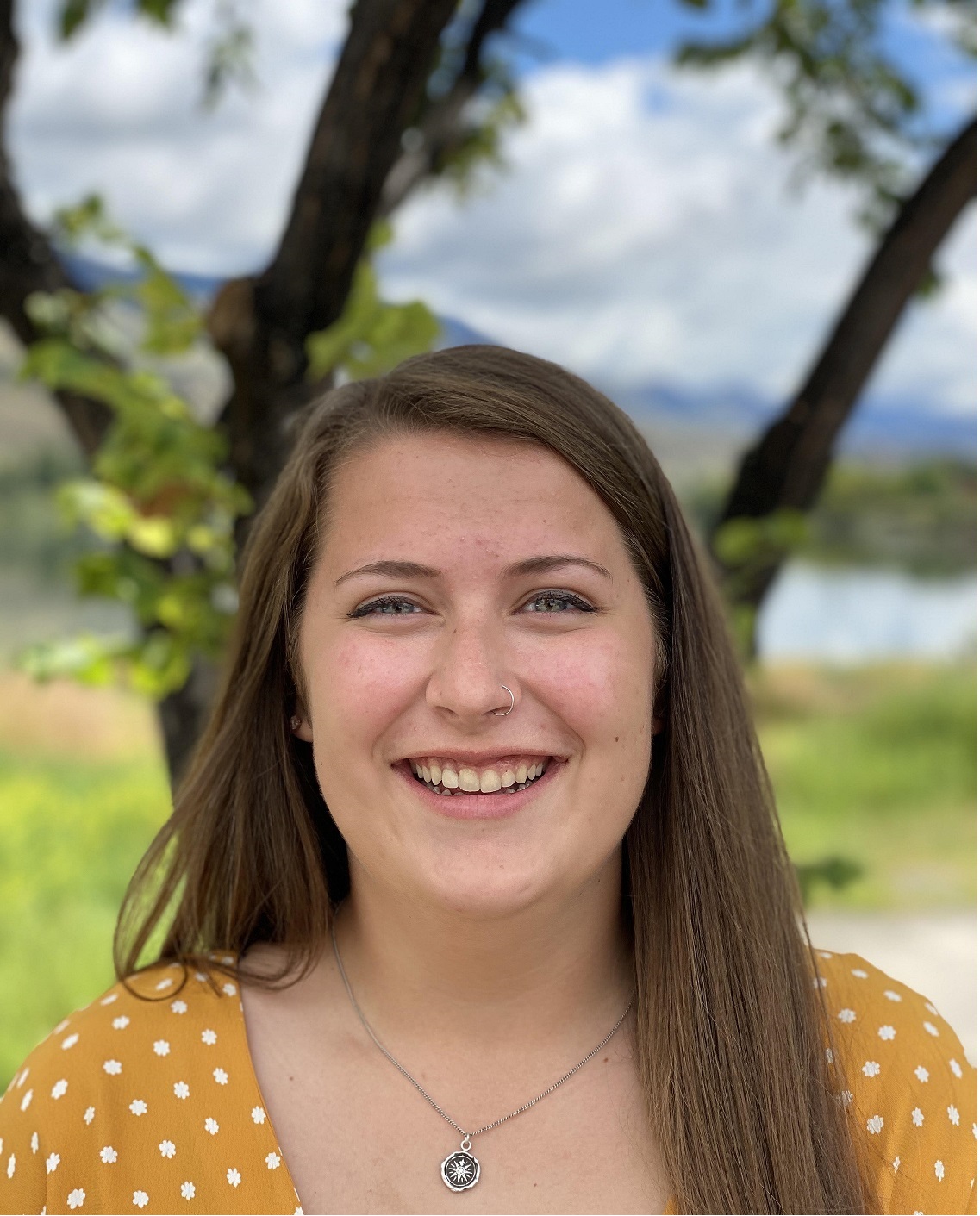


When Muskan Tiwari began her undergraduate studies at the University of the Fraser Valley, she expected to follow the typical path to medical school by majoring in biology. That all changed in second year when Muskan enrolled in an introductory physics course and discovered her new passion, “a subject that challenged and fulfilled me like nothing else had.”
Though switching majors was “initially overwhelming,” studying physics gave Muskan “a lot of power to think analytically and apply problem solving skills.” And despite it not being an obvious precursor to medical school, Muskan believes a physics degree will support her pursuit of a career in medicine. “I can bring a different approach from physics to medicine,” she says.
The transition has not been without its challenges, though. The study of physics required a different style of thinking. Muskan has also “felt isolated in [this] male-dominated field.” She recounts dropping out of a robotics class in high school because she was the only woman in attendance. But, when she again found herself in the minority in her physics courses at UFV, Muskan vowed to not be intimidated: “This time, I’m not going to back out. I’m going to do what I love.”
Muskan has embraced physics both in and out of the classroom. She was elected Vice-President (Social) of the Physics Student Association in her third year and currently serves as the Vice-President (Internal) of the UFV Women in Engineering, Science, and Technology (WEST). Muskan is also the founder and President of the UFV Feminist Collective. It is through her work with these groups that Muskan hopes “to see more women entering fields that have traditionally been male dominated.”
Outside of her studies, Muskan enjoys volunteering in her community. She has participated in various medical-related programs, including a South Asian Day Program for Seniors. “I love to hear about their learned experience,” Muskan says. “I’m always looking to learn from other people.”
The BC Scholarship Society awards the Women in Technology & Indigenous Women in Technology Scholarships to support academically exceptional students in the fields of Computer/Data Science, Physics, Engineering, or Mathematics through their educational journey. For Muskan, the scholarship will help support her goal of attending medical school.
To prepare for medical school, Muskan will pursue additional biology and chemistry courses after completing her physics degree. Her career interests are broad: neurology, cardiac medicine, and radiation therapy all spark her curiosity. Through hospital‑based coursework, she has observed medical physicists at work firsthand, deepening her interest in how physics meets patient care.
Whether she becomes a medical physicist, a surgeon, or something in between, Tiwari’s path is clear: a future where science, service, and representation are inseparable.